
What happens when you step into and notice a beautiful space? What are you really seeing?
You probably immediately notice the finishes. The cabinetry is custom. The lighting is stunning. The furniture looks like it came straight out of a design showroom!!
And yet…
Over decades of renovating and designing homes, I’ve become convinced that our brains are responding to something much deeper than whether we like a particular sofa or light fixture!! Before we even notice the finishes, our brains process the relationships between them.
That’s what I call “the invisible math of a room.”
Your brain solving a design equation…
Our brains don’t actually experience a room one object at a time. They experience the room as a whole.
Within moments of entering a space, your brain has already made hundreds of subconscious observations. It’s evaluated brightness, contrast, scale, balance, openness, visual weight, and distance. It’s compared the height of the ceiling to the size of the furniture. It’s noticed whether the lighting feels intimate or exposes every corner of the space equally.
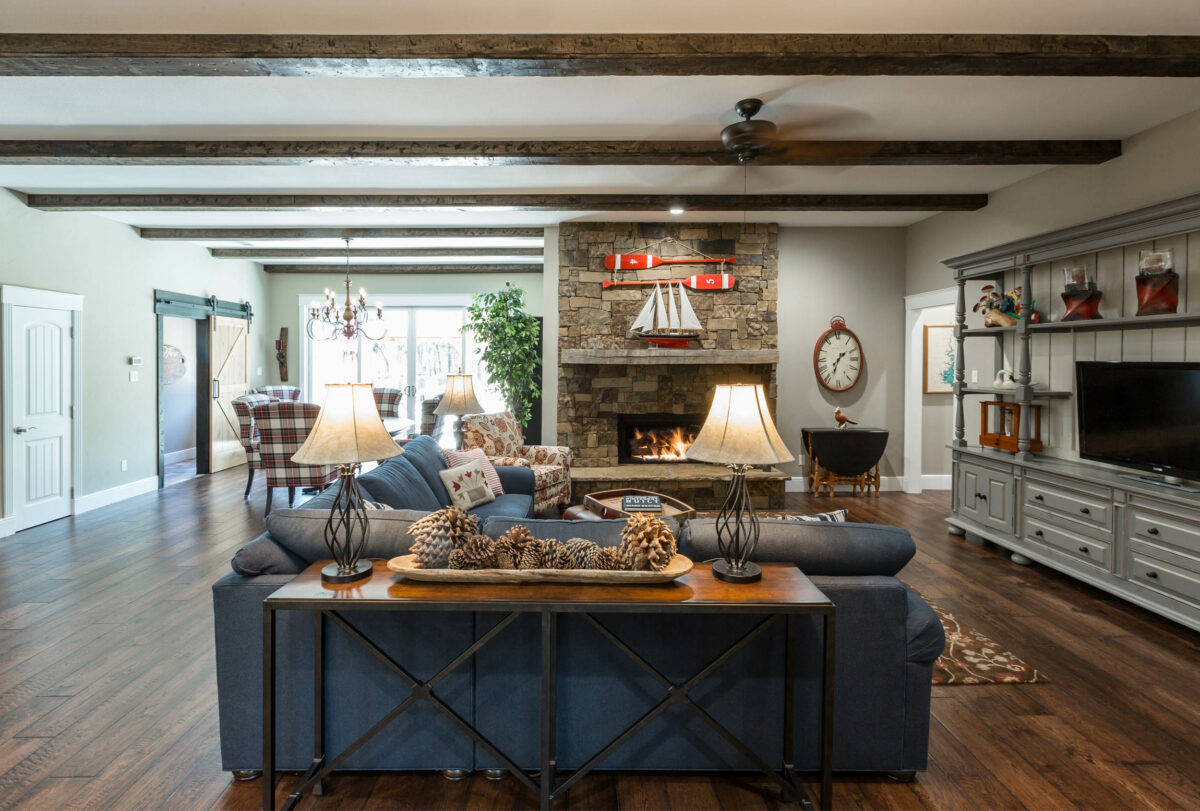
Your brain has also decided whether how the room feels. Energetic? Inviting? Luxurious? Relaxing? Gawd awful?!
As a registered interior designer, part of my job is to understand what your brain is already doing instinctively.
Once you, too, understand some of the more important underlying relationships between design choices, you begin to see that the feeling a room creates has surprisingly little to do with any single product!! It’s created by dozens of design decisions supporting one another.
And personally, I believe that three of them have an IMMENSE influence on how a room feels. Those are:
- Ceiling height
- Lighting
- Proportion
When three good decisions create one disappointing room
Let’s look at what this actually means in practice…
One common request we get is, “We’d love to raise the ceiling.” And sometimes, that’s exactly the right decision.
Higher ceilings can make a room feel:
- Brighter
- More spacious
- And more architecturally interesting
They can create opportunities for:
- Beautiful beams
- Dramatic windows
- Or statement lighting that simply wouldn’t work in a lower-ceilinged room
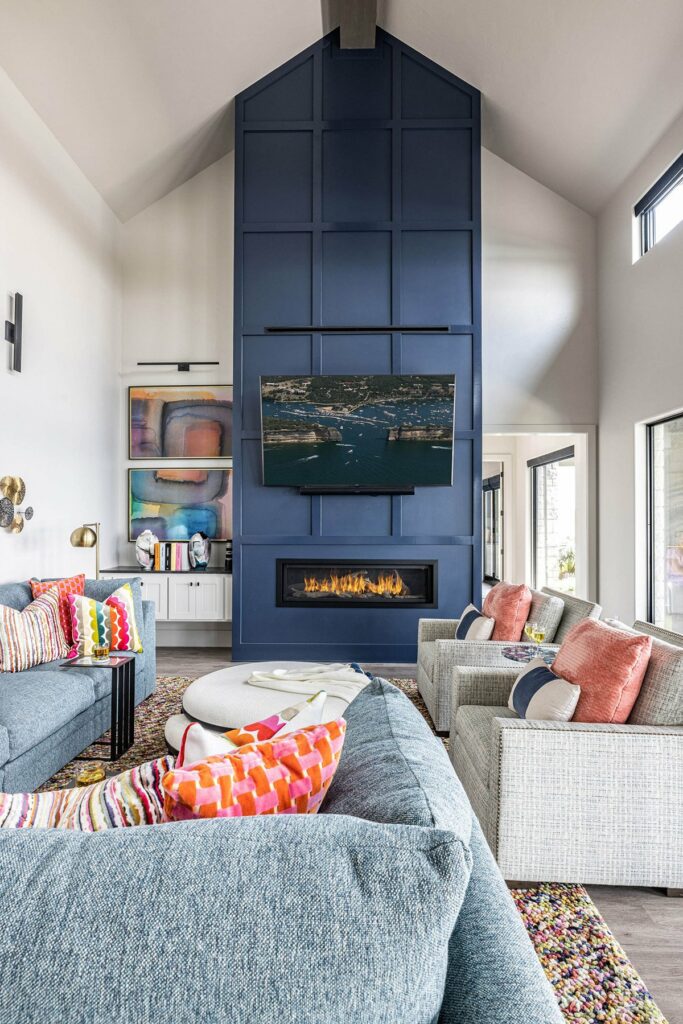
But…the moment you increase the height of your room, you’ve also increased its visual volume. That changes how EVERY other object in the room is perceived.
For example, maybe your family room originally had nine-foot ceilings. Your sofa felt appropriately scaled. The chandelier felt substantial, for sure.
Now…imagine removing the existing ceiling and replacing it with a vaulted ceiling that peaks at sixteen feet.
The sofa that anchored the room now occupies a much smaller percentage of the overall visual space, and the chandelier seems to float instead of command attention. Even the fireplace (which seemed generous before) now looks undersized because the wall surrounding it has become DRAMATICALLY larger.
Why I help you think in systems instead of products
One of the biggest misconceptions about renovation and interior design is that our job revolves around selecting beautiful things. Yes, I can talk for HOURS about cabinetry, plumbing fixtures, countertops, lighting, flooring, fabrics…but those decisions come later in the design process.
First, I work with you to determine:

Should this room encourage conversation? Should it feel calm after a busy day? Should it make your holiday gatherings feel effortless? Should it showcase your personality when guests walk through the front door?!
Those answers become the framework for the decisions that follow. Lighting is another PERFECT example!
The first thing people think of with regard to lighting is brightness. They might ask whether they need more recessed lights, or whether one chandelier will provide enough illumination.
But that’s the wrong place to start. Instead, I work with you to learn where the eye should travel. Together, we decide what deserves attention FIRST. We’ll consider how shadows shape the room at all times of day—because, of course, that lighting works differently at noon or after sunset!!
The real design work that I do happens in the relationship between light, architecture, and the people using the space.
…Yes, that’s YOU, your family, and your guests.
The Trifecta: why ceiling height, lighting, and proportion must work together
Let’s come back to the three elements I started with.
- Ceiling height establishes the volume of a room. It influences whether a space naturally feels intimate or expansive and determines how much visual weight the architecture can comfortably support.
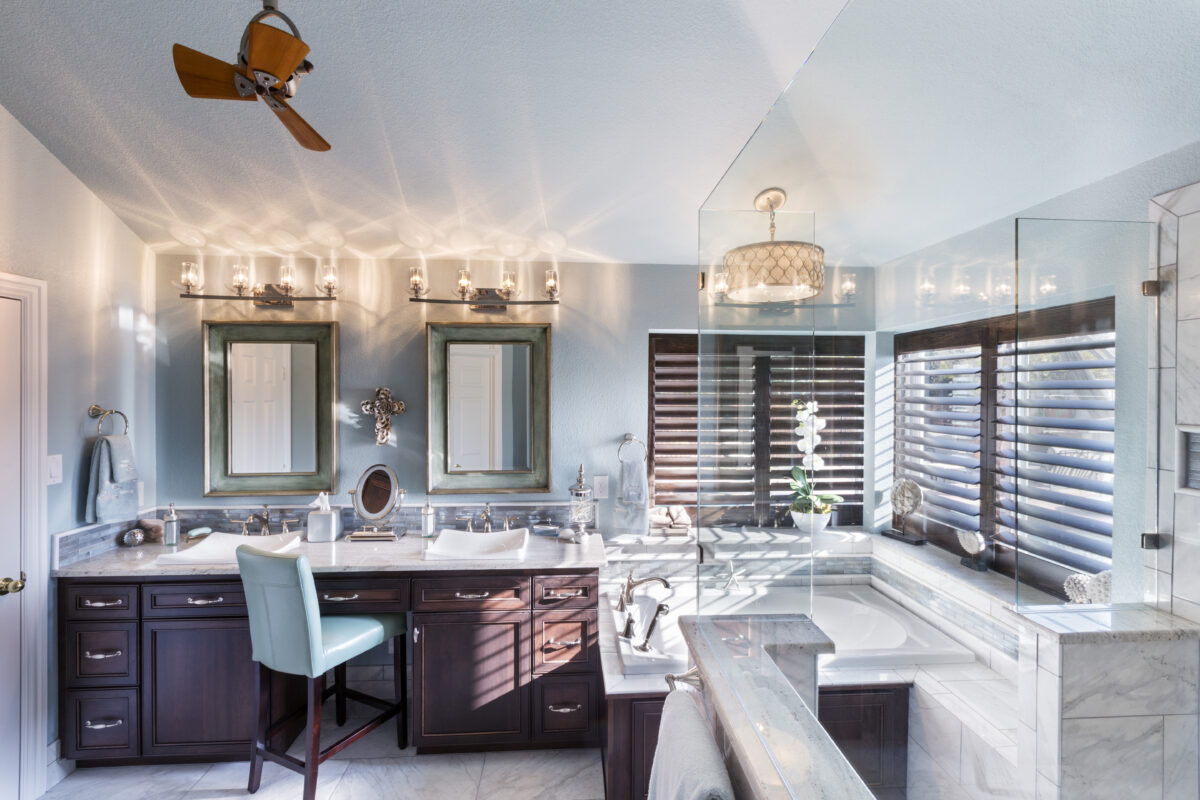
- Lighting shapes the experience of that architecture. It can draw your eye upward, emphasize beautiful details, soften hard edges, create warmth, OR flatten a room. It changes throughout the day, too, making the same room feel completely different from morning to evening.
- Proportion ties EVERYTHING together. It determines whether furnishings, artwork, architectural details, and lighting feel like they belong in the same conversation…(or not).
None of these elements operates independently.
Each one influences the other two.
The goal is harmony
After more than thirty years designing homes, I know there are very few universal answers. There are, however, principles and formulas. There are direct causal relationships between the variables that we can anticipate and calculate, too.
My final two cents for you is: don’t ask yourself whether a particular light fixture is beautiful. Ask what weight it will carry, what role it will play, in the WHOLE context of the room you want it in.
Want to talk about how these factors come together in your space? Schedule a 15-minute video call with me!!
About the author:

Robin Burrill, RID, NCIDQ, ASID, IDS, CAPS, is an award-winning professional kitchen, bath, and interior designer. Robin and her husband, Robert Mathews, have owned Signature Home Services, Inc. for over three decades, establishing a superior in-house team with a widespread reputation for delivering meticulous design to their many repeat clients.
In 2022, the national publication, Kitchen and Bath Design News magazine, named Robin to their Top Innovator list in recognition of her achievements in the field of kitchen and bath design. In 2024, she was named one of the Fall 2024 Market Pros and “tastemakers” by ANDMORE at High Point Market. In 2024 and again in 2025, Fixr identified her as one of the Top Professional Interior Designers for their nationwide audience. At the start of 2025, she then acted as one of Dallas Market’s “Style Eyes” at Lightovation and Total Home & Gift Market.
Over her extensive career, Robin has been quoted in Architectural Digest and Forbes multiple times; her design work has been featured in top national trade publications; and she has been interviewed for Designers Today magazine’s “Profiles in Design” video series, among others. Widely respected for the depth of her knowledge, Robin is a sought after speaker and judge for many design industry events.
In 2023, Robin designed a bench for Charleston Forge, making her foray into product design. Robin currently serves as a volunteer on the board of the Dallas/Ft. Worth chapter of the Interior Design Society.
Leave a Reply