
Will the future of AI (as used in homes) bring us more conveniences? Yes. But it will also save us thousands of dollars a year. I’d like more people to be talking about this!! So I guess I’ll start…
For example, your home could track when electricity on the grid is cheapest, when sunshine will generate the most heat, AND when your family needs temperature adjustments in each part of your home. It could coordinate appliances, your water heater, and vehicle charging, all without sacrificing comfort. In fact…the flipside of this AI in homes will bring you more comfort.
Now, let me take that a step further…
What if, WHAT IF, the home you remodel at age 50 could adapt intelligently over time to help you live independently at age 85?? Adjusting lighting before your reach the stairway…sensors that recognize an unusual nighttime routine, or a possible fall, each time to discretely alert the right person. A home that adapts everyday appliance use as physical abilities change.
WOW.
And what about preventative maintenance in your home?! The leak that goes unnoticed now will be detected by AI in the near future. The same home could even shut off the water and notify you before serious damage spreads!!
These are just a few of my official predictions for how AI in homes will save money AND boost comfort and customization.
The Next Five Years
1. Your Home As Its Own Energy Manager
We’ve already seen smart home comfort and convenience enhancements. But I expect one of the next MAJOR benefits to be financial.
These days, our homes consume energy passively. We set the thermostat, turn appliances on and off, then pay the bill at the end of the month.
But with AI integrations into these systems (rolled out by the manufacturers and providers), homes will able to continuously analyze: electricity prices, weather forecasts, household routines, and energy consumption.
Occupancy sensors are already part of the equation in some homes!
This all means your home could cool the house before peak electricity rates kick in, or charge your vehicle when power is cheapest, or coordinate your appliances to avoid unnecessary energy costs…
Some of these technologies already exist, but I specifically expect AI to make them more coordinated, automatic and effective.
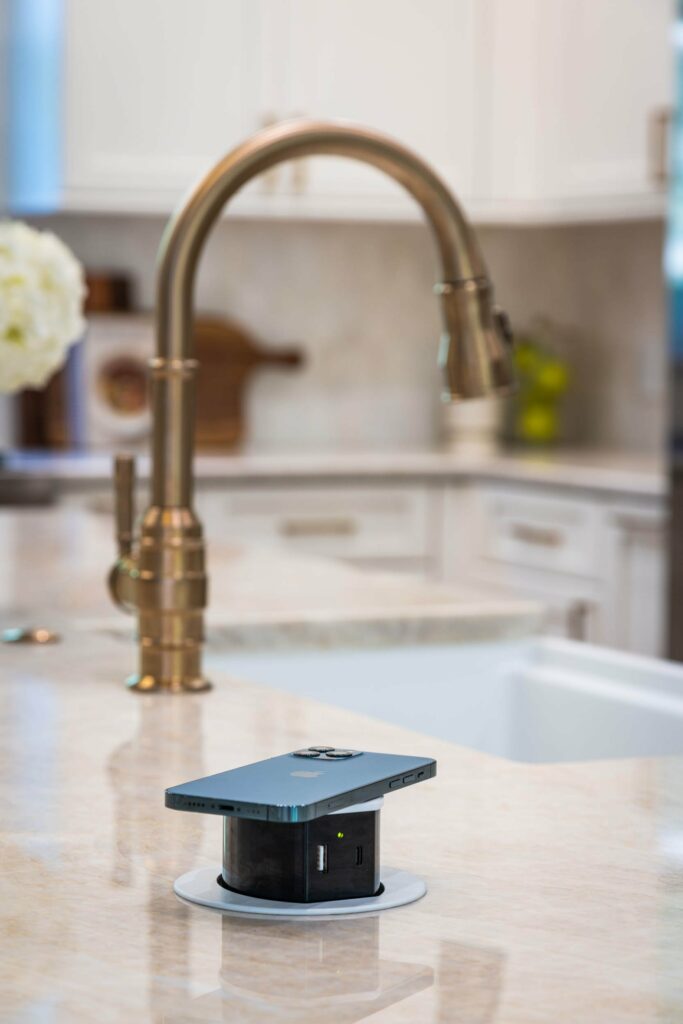
2. Your Home Will Spot Problems Before Expensive Repairs
Most serious problems in our homes develop out of sight. What a pain! Water leaks, failing equipment, deteriorating electrical components, inefficient HVAC systems…these are where the most substantial expenses hit, and usually only after something has gone wrong.
In the very near future, AI-powered monitoring will make predictive home maintenance a piece of cake. This means catching unusual moisture or unusual water consumption that could signal a leak. Or, instead of having an air conditioner fail during a heat wave (which we’re all too familiar with here in North Tarrant County), y’all could be warned that performance is deteriorating and that maintenance is needed.

This will fundamentally change the economics of home maintenance. Preventing a problem is ALWAYS preferable to repairing the damage it causes…
3. Your Kitchen: Totally Coordinated!
We already have fridges with cameras inside of them with lots of other fun features. Working AI into that equation will make the fridge content alerts, insights and recommendations truly extraordinary.
And beyond that, cooking equipment will soon be able to identify food types, monitor its progress as it cooks, and adjust temperatures and cooking times. For you, automatically. Eventually, as robotics becomes more affordable and practical, we’ll see kitchen systems that take on some physical tasks rather than simply providing instructions, too…


And again, this is about more than convenience. It also means less wasted food, less time spent planning and preparing meals, and better adhesion to whatever dietary preferences or needs y’all have!!
4. AI Interior Design and Remodeling
Today, what our clients struggle with most is visualizing how a space will look with alltheir selections and structural changes, not to mention how it will actually FEEL to use and live in. And not just when the remodel is done…but how it’ll feel on a regular weekday when it’s not as clean as you’d like, or when the weather outside is lousy, or when you have tons of guests over.
AI is going to increasingly let you see and experience this before you ever spend a penny on a remodel.
In the near future, we’ll increasingly use AI to help remodel clients explore their unique designs using images and measurements of their actual homes, with immersive virtual and augmented reality experiences. This will facilitate comparing layouts, materials, lighting conditions, and finishes, and see how different choices affect appearance and budget…
The Next Ten Years: By 2036
5. Your Home Helping You Age Independently
Of all the changes AI will bring to residential living, this is the most meaningful, to me. I’m biased, of course, because I’ve been a Certified Aging In Place Specialist for sooo many years, but part of my speech on the subject is that we should NOT focus only on aging in place. We also need to talk about how a home performs if someone in your household breaks a leg and is in a cast for two months, or if older (or much younger) guests visit often…it’s about design for ALL ages, I always say.
…And soon, AI in homes will be able to adjust on a dime for anyone in any circumstance!! Permanent, temporary, whatever.
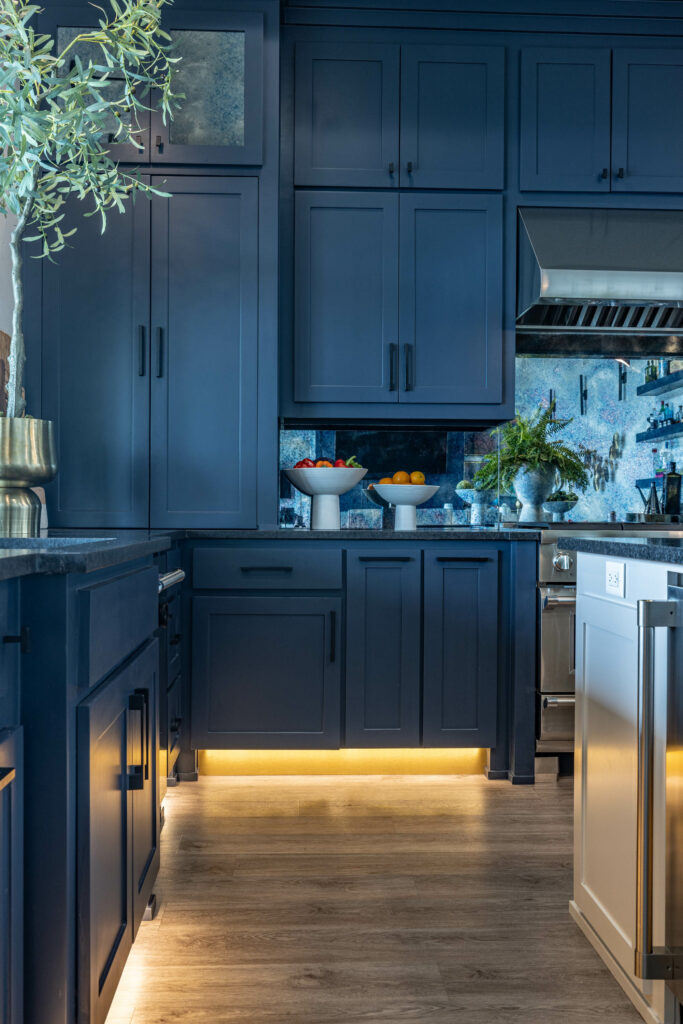
Here’s how AI will take design for all ages much further, including living independently longer in our homes.
- AI that recognizes abnormal patterns of movement or when something begins to change
- Adjustments made as a result, like lighting a nighttime route to the bathroom
- Or lighting the staircase as someone approaches
- Or catching a fall and notifying the right person
- Or changing lighting temperature according to the visibility needed
- Or adjusting cooling for sleep quality if poor sleep is detected over several days
- Or changing the water pressure when the handheld is pulled out of its holder
- Etc…
6. Homes Coordinating Their Own Systems
Today, the most sophisticated smart homes can actually be frustrating. Why? Because all the smart systems and devices rely on separate applications and providers. But over the next decade, I expect those systems to become MUCH more integrated.
Instead of programming individual devices, y’all could communicate broader goals.
For example, to reduce your energy bill by 20%, then let the AI evaluate opportunities ACROSS heating, cooling, lighting, and appliance use. OR you might say that an older family member will be staying for several months, and your home will make needed adjustments to lighting, temperature, and safety monitoring.
The Most Intelligent Homes Won’t Look Techy
By the way, I don’t think the home of 2036 will necessarily look futuristic. We’re not on our way to a Jetsons reality!! I don’t even imagine too many screens, or every room with visible electronics…in fact, we’ll probably steer CLEAR from these clichés in future home design.
The most sophisticated homes, I believe, will keep their technology almost invisible. Sensors could be integrated into building materials and fixtures. Lighting, ventilation, shading, and climate control will simply work together without constant input from occupants.

The most beautifully designed homes of the future will retain all the warmth and character we value today while operating with a level of coordinated intelligence that would have seemed extraordinary just a few years before.
This, to me, is where thoughtful remodeling will remain incredibly important. Homes still have to FEEL like homes to us. Technology will simply serve the people who live there.

What Does This Mean for Planning a Remodel Today?
Technology evolves FAST. Some products will become obsolete, some companies will disappear, and not every promised innovation will deliver meaningful benefits. So the smartest approach today is to make remodeling decisions that preserve flexibility.
How?
Think about…
- Planning for reliable home networking
- Choosing equipment that supports interoperability
- Installing additional electrical capacity where appropriate
- Designing spaces that accommodate future accessibility needs

And the big one: we should expect MORE from our homes. No two households are identical, so why should our homes be? Dig deep into your needs, wants and desires now and get CRYSTAL clear on what you want “home” to represent to you.
Like…
- Better home gyms
- Multipurpose garages
- Forgotten transition areas
- Future-focused home offices
Keep reading for other key questions to ask yourself to truly “future proof” your home…
Our homes are on the cusp of changing from a “shelter” to the heart of where we support our health and happiness. Though some still focus now on how much a home is worth (and the overused “ROI,” cringe), in the near future, we’ll all ask how much a home saves us, can protect us, or how many more years it can help us live independently.
This is what I’ve been saying for years…true Return On Enjoyment®!!
Drop a comment here or reach out to me personally to tell me what you think!!
About the author:

Robin Burrill, RID, NCIDQ, ASID, IDS, CAPS, is an award-winning professional kitchen, bath, and interior designer. Robin and her husband, Robert Mathews, have owned Signature Home Services, Inc. for over three decades, establishing a superior in-house team with a widespread reputation for delivering meticulous design to their many repeat clients.
In 2022, the national publication, Kitchen and Bath Design News magazine, named Robin to their Top Innovator list in recognition of her achievements in the field of kitchen and bath design. In 2024, she was named one of the Fall 2024 Market Pros and “tastemakers” by ANDMORE at High Point Market. In 2024 and again in 2025, Fixr identified her as one of the Top Professional Interior Designers for their nationwide audience. At the start of 2025, she then acted as one of Dallas Market’s “Style Eyes” at Lightovation and Total Home & Gift Market.
Over her extensive career, Robin has been quoted in Architectural Digest and Forbes multiple times; her design work has been featured in top national trade publications; and she has been interviewed for Designers Today magazine’s “Profiles in Design” video series, among others. Widely respected for the depth of her knowledge, Robin is a sought after speaker and judge for many design industry events.
In 2023, Robin designed a bench for Charleston Forge, making her foray into product design. Robin currently serves as a volunteer on the board of the Dallas/Ft. Worth chapter of the Interior Design Society.
Leave a Reply