
“What lighting temperature should I use?”
It sounds like a simple question. In fact, it might make some folks feel in-the-know. “Yes, lighting temperature is important—and I know how it works.”
But if it were that easy to create beautiful spaces, there would be more beautiful spaces!!
If you’ve spent time searching about lighting temperature online, you’ve probably found simple formulas like: use 2700K if you want a room to feel warm, 3000K for something a little cleaner. Use 4000K if you want a brighter, crisper look, etc.
BUT…before I ever tell you what Kelvin temperature to use, I want to know a lot more about the room. And how you use it.
For instance, I want to know which direction(s) the windows face. I want to see the undertones in your cabinetry, countertops, flooring, paint and furnishings at different times of day. I want to know whether we’re lighting a polished surface that reflects light or a honed texture that absorbs it differently.
And I want to know you.
When do you actually use this room? What do you do here? Is this the kitchen where everyone gathers at the end of the day? Is this a bathroom where you get ready before the sun comes up? Is this a dining room that’s almost only used at night?
READ: you’re NOT choosing a light bulb, but deciding how everything will look and feel in your finished space.
So…before I choose a lighting temperature, there are the six things I ask.
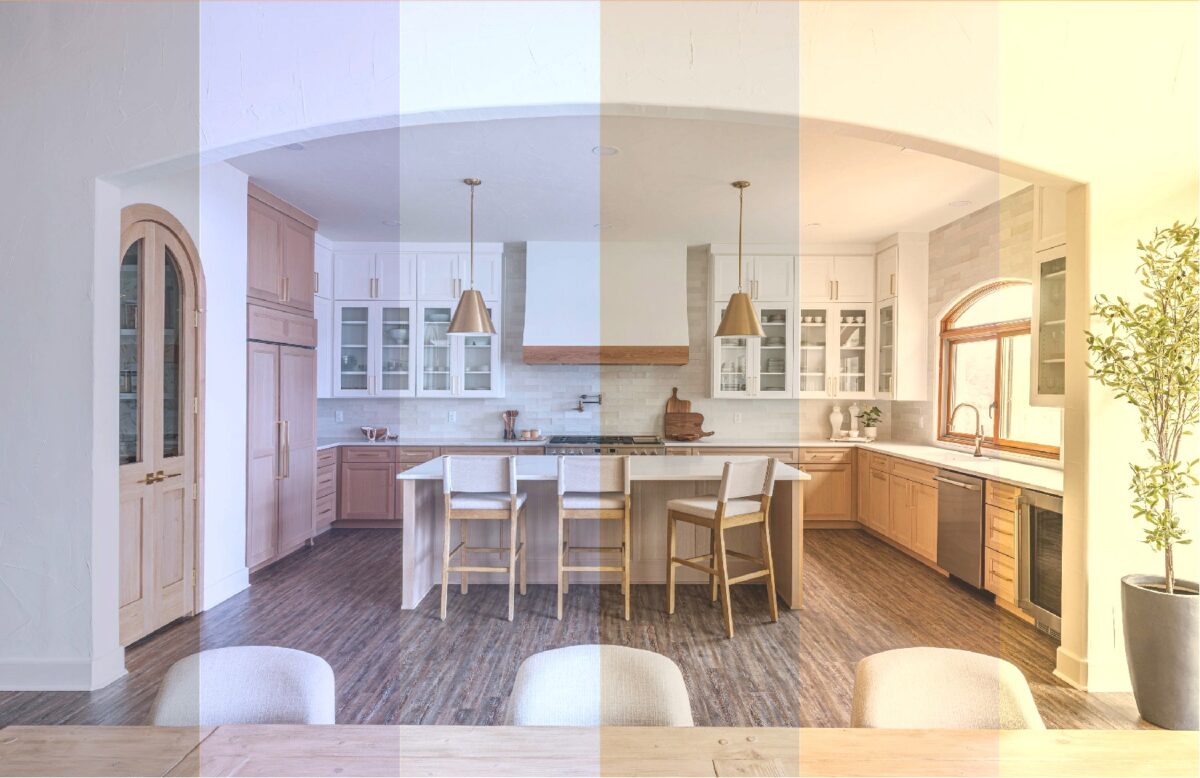
1. What natural light does this room get?

Before I add lighting, I want to understand the light that the room already has.
…And by the way, “this room gets a lot of natural light” doesn’t tell me NEARLY enough.
I want to know:
- Which direction do the windows face?
- When does direct sunlight enter the room?
- How far does it travel?
- Is there a covered patio outside those windows?
- What about mature trees?
- Or a neighboring house?
- What happens to that room at 8:00 AM versus 4:00 PM?
Natural light, after all, has a temperature, too! And it changes throughout the day. That white paint you selected? It isn’t going to look the same at 9 AM as it does at 5 PM…
Let’s say someone tells you, “3000K is perfect for a kitchen.” Okay…but which kitchen? The kitchen with tons of windows that flood the space with warm evening sun? Or the north-facing kitchen that gets very little direct sunlight? Or the kitchen with creamy cabinetry and warm wood floors?
Those are not the same kitchen!!
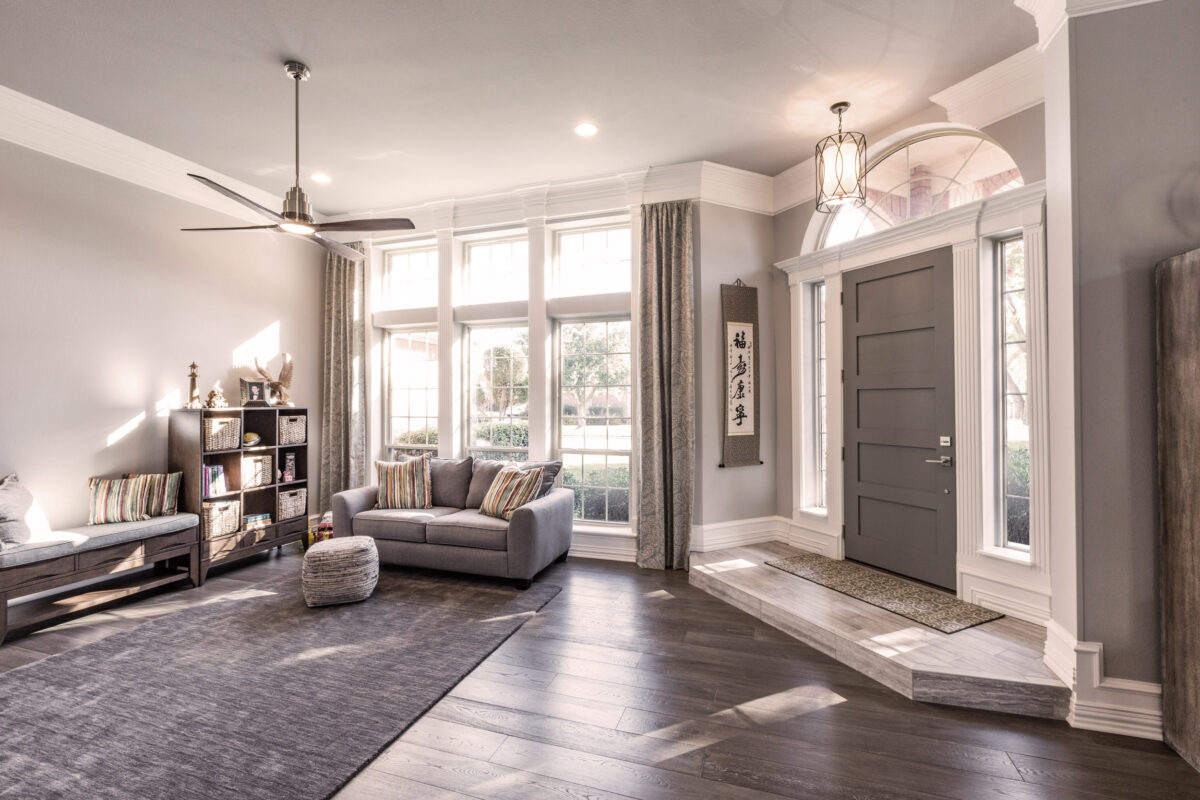
A living room flooded with white, clear morning light.
2. What colors and undertones are in the room?
Here’s where lighting temperatures get REAL interesting, because the color you choose isn’t the color you’re going to see at every time of day.
For example, your “white” cabinetry might lean warm, cool, creamy, gray, pink or green depending on the natural light and on your lighting selection. Your wood floors have undertones, too! So do your tile, fabrics, rugs, countertops, furniture and wall paint.
…And your lighting can either play beautifully with those undertones, or bring out the EXACT look you never wanted to see.

This is why I don’t select lighting temperature independently from the rest of the design. I’m thinking about it while we decide on your material selections. Lighting skates across each surface and reacts to it.
3. What is this room actually used for?
This sounds obvious, but it isn’t!
If you tell me that we’re designing a kitchen, I know what the room is. But I still don’t know how YOU use it.
For instance…
- Do you cook a lot?
- Are you chopping, prepping and cooking every night?
- Do you bake?
- Do you entertain?
- Is everyone sitting at the island while you cook?
- Do you work there during the day?
- Is this where the kids—or grandkids—do homework?
- Is it where everyone somehow ends up when you have twenty people over for the holidays?
Those answers matter, because all lighting has a JOB to do before we ever talk about how beautiful it is. And the lighting that might be fabulous while prepping dinner might be WAY too much when you’re sitting at the same island with a glass of wine.
And that happens throughout your home!
A bathroom where you put on makeup at 6:30 AM needs to do something very different from a powder bath that your guests use during a dinner party. A living room where you read needs something different than one used primarily for entertaining.
And oftentimes, we need the SAME room to do several things well. THAT’S when lighting design gets even more interesting…when layered lighting and simple additions like dimmers allow you to transition a room from one use to another.
4. When do you use the room?
We just talked about how you use a room. Next, I need to know WHEN.
Think about a breakfast nook. If that’s where you sit every morning with your coffee, chances are natural light is doing most of the work. Depending on the direction the windows face, you might even be working with beautiful morning sunlight…
But that nook where kids sit with homework until dinnertime? TOTALLY different story. The natural light studied in question 1 might be GONE. Now, everything else you selected for that room—wall color, table, fabric on the nook bench—is being seen almost entirely under artificial lighting.
Then, at 8:00 PM, dinner is over. Even the pendants above the nook are dimmed. Maybe the undercabinet lighting is still on. You sit at the island talking with your family, and suddenly you want that same space to feel softer and more intimate.
That can be achieved when all these questions are taken seriously as a whole…
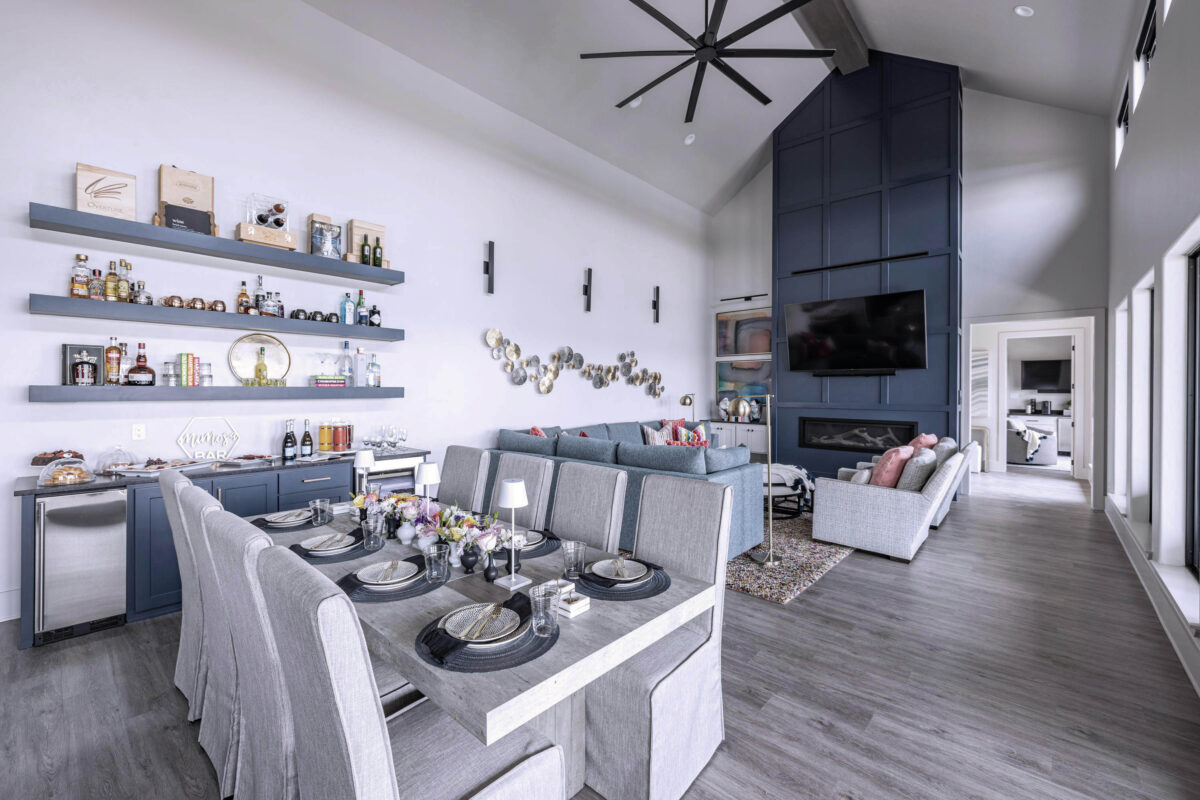
A living room with north-facing windows won’t get direct light at any time of day.
5. For each lighting (fixture and bulb) selection, what other light sources are in the room?
Here’s a place where a perfectly good lighting temperature can go VERY wrong: layered lighting design.
Say you have recessed lighting in the ceiling and pendants over the kitchen island. Undercabinet lighting, too, and a chandelier over the breakfast table. Lighting inside glass-front cabinets. Maybe even lighting that highlights art or architectural details.
This is where I see interior design go sideways…
The electrician installs 4000K LED tape under the cabinets. The beautiful pendants you selected have integrated LEDs at another temperature. Someone buys 2700K bulbs for the lamps because the box says, “warm white.” Together, this looks like a visual mess!
Of course, the point of layered lighting IS to include lights that behave differently. The pendants will set mood, and task lighting will give you illumination better suited for “work” that happens in a space. But the intention HAS to be clear with each selection. All of those individual lighting decisions need to come together as one…
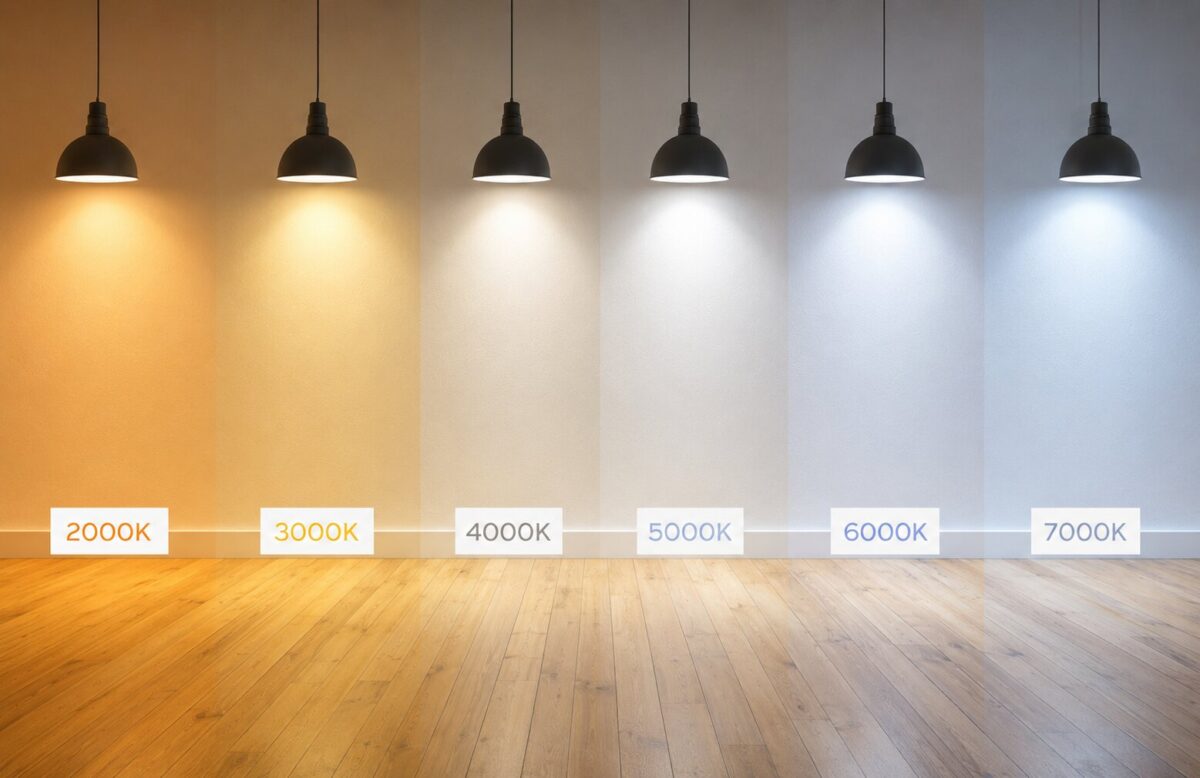
6. Who is using the room?
I’ve talked about how the room is used. But I also want to know WHO is using it. Because we don’t all see light the same way!!
As we age, our eyes need more light to see the same level of detail. Glare can become more bothersome, too, and contrast becomes more important. Suddenly, that beautiful, moody lighting that works perfectly for hosting a dinner among friends might make it difficult for someone else to actually function in the space.
Does that mean your home needs to get brighter and brighter and colder as you get older? PLEASE, no!! It just means I need to design the lighting more intelligently.
Example: I might need to think more carefully about glare, shadows and contrast. And I definitely need to think about where the light is coming from (not just how much of it we have).
We’re also lighting specific people, not just for them. And that’s a factor, too! Just think about your bathroom vanity!!
Before you buy another box of bulbs based on “warm white” or a Kelvin number, look at your room through these six questions. You might discover the problem isn’t the temperature at all!!
Comment here with what you learn, or schedule a 15-minute video call with me to talk about lighting in your home!!
About the author:

Robin Burrill, RID, NCIDQ, ASID, IDS, CAPS, is an award-winning professional kitchen, bath, and interior designer. Robin and her husband, Robert Mathews, have owned Signature Home Services, Inc. for over three decades, establishing a superior in-house team with a widespread reputation for delivering meticulous design to their many repeat clients.
In 2022, the national publication, Kitchen and Bath Design News magazine, named Robin to their Top Innovator list in recognition of her achievements in the field of kitchen and bath design. In 2024, she was named one of the Fall 2024 Market Pros and “tastemakers” by ANDMORE at High Point Market. In 2024 and again in 2025, Fixr identified her as one of the Top Professional Interior Designers for their nationwide audience. At the start of 2025, she then acted as one of Dallas Market’s “Style Eyes” at Lightovation and Total Home & Gift Market.
Over her extensive career, Robin has been quoted in Architectural Digest and Forbes multiple times; her design work has been featured in top national trade publications; and she has been interviewed for Designers Today magazine’s “Profiles in Design” video series, among others. Widely respected for the depth of her knowledge, Robin is a sought after speaker and judge for many design industry events.
In 2023, Robin designed a bench for Charleston Forge, making her foray into product design. Robin currently serves as a volunteer on the board of the Dallas/Ft. Worth chapter of the Interior Design Society.