
You have a remodel idea, then every contractor says it will cost more than you thought.
Every. Single. One.
Why does remodeling your home cost so much? What SPECIFIC choices drive the cost up the most?
If you knew that…you could drive it back down. Right?
Well, yes. Maybe.
By the time folks begin planning a renovation, they’ve done some of their own research. They’ve looked at photos…or watched renovation shows…or asked friends what they paid for their remodels…or maybe asked AI what a kitchen or bathroom “should” cost.
But then, you put your selections on paper, and you can’t make ANY sense of the number that remodelers send back to you.
Prepare for a lightbulb moment, now…not ALL decisions that drive costare necessarily worth it. Yet some of them definitely are. And you need to know the difference.
It’s time you got more complete information, especially because the difference is NOT always obvious. Once you understand these cost drivers, you gain control.
Here are the primary selections, materials, and design choices that drive remodel costs up…

The Upgrades That Raise Costs—But can Be Worth It
Not every cost driver is a mistake. Some of these selections increase the price of your project, but they’re also the features that make your home feel extraordinary. When you truly want these features, when you’ll actually use and enjoy them, then these upgrades are VERY satisfying decisions.
Your mission is to decide which of these features you really, really want, then to accept that the materials and labor behind them have to cost more.
Kitchen features that can raise remodel costs
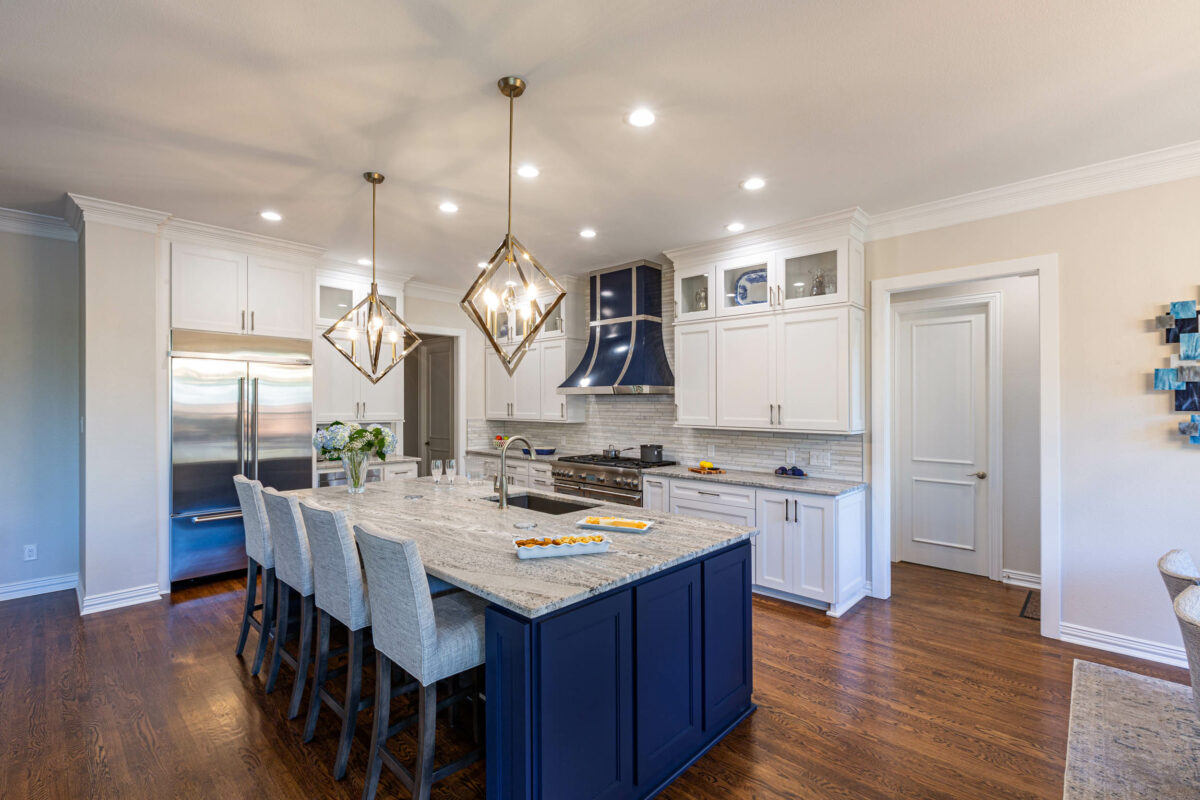
- Large kitchen islands: Bigger islands mean more cabinetry, larger stone slabs, more electrical work, and structural considerations if the layout changes.
- Waterfall countertop edges: When the countertop material runs down the sides of the island, it requires additional slabs of stone and very precise fabrication.
- Professional-style ranges: Large gas ranges with six or eight burners, griddles, or double ovens often require upgraded ventilation, electrical work, and sometimes gas line changes.
- Built-in refrigerator columns: Separate refrigerator and freezer columns blend into cabinetry and create a seamless look in the kitchen. They also cost significantly more than standard refrigerators.
- Full-height stone backsplashes: Instead of tile, some kitchens use a continuous slab of stone from the countertop all the way to the cabinets or ceiling. This requires additional material and specialized installation.
- Custom cabinetry: Custom cabinets allow homeowners to control every detail…the sizes, storage features, interior organization, and finish. This level of customization takes more design work and more craftsmanship.
Bathroom upgrades that drive costs higher
- Large walk-in showers with frameless glass: Expansive glass panels require thicker glass, specialized hardware, and precise installation.
- Curbless showers: These require careful waterproofing and precise floor construction so that water drains correctly, meaning the installation is more complex.
- Heated bathroom floors: Radiant floor heating adds electrical work and specialized installation.
- Freestanding bathtubs: These sculptural tubs are beautiful, but they require more space and careful plumbing placement, which can increase costs.
Flooring choices that increase budgets
- Wide-plank hardwood flooring: Wider boards require higher-quality wood and careful installation to prevent movement over time.
- Patterned wood floors: Herringbone and chevron layouts involve significantly more labor than straight plank installation.
- Large-format tile: Oversized tiles require precise installation and specialized handling.
Windows and doors that impact remodel cost
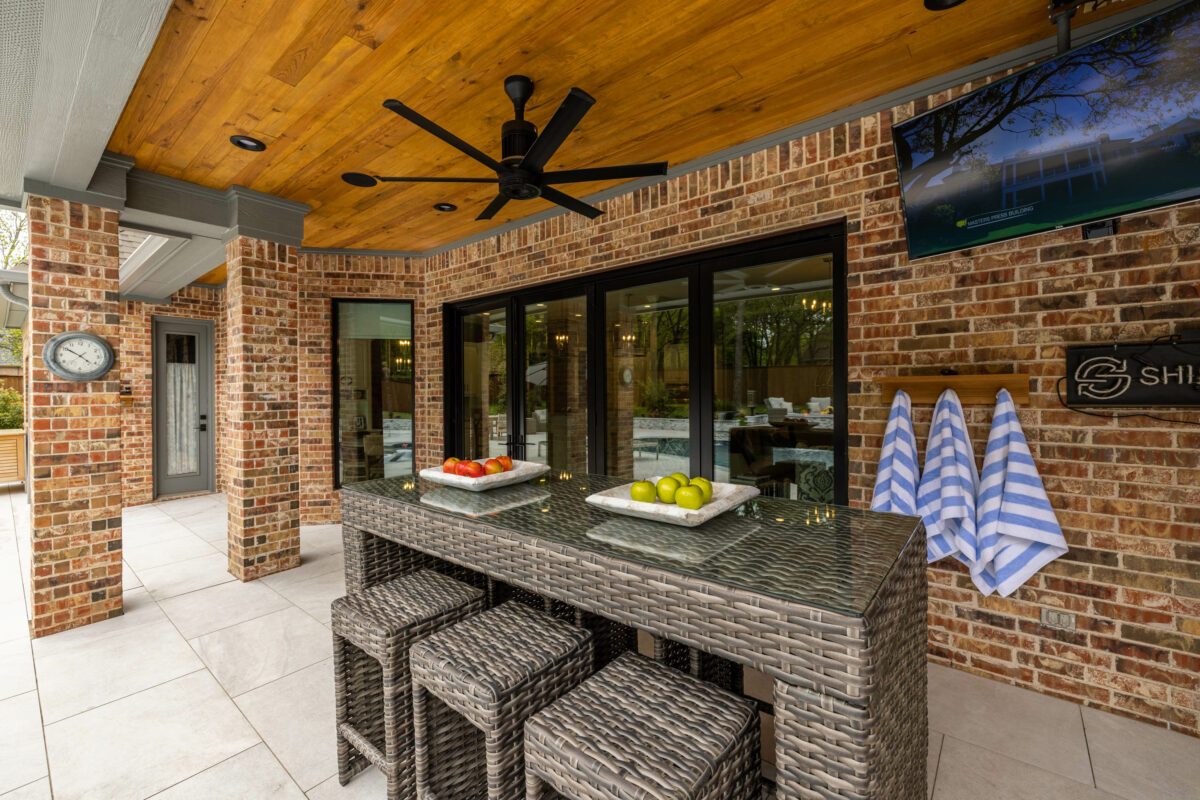
- Large sliding glass door systems: These dramatic doors open entire walls to the outdoors. They require structural engineering, heavy materials, and careful installation.
- Oversized front entry doors: A large pivot door requires specialty materials and more complex installation.
Structural changes
- Removing walls for open floor plans: Opening up a home often requires structural beams, engineering, and shrewd construction.
- Expanding kitchens or bathrooms: Simply making rooms larger increases framing, flooring, cabinetry, plumbing, electrical work, and finishes…
Outdoor living additions
- Outdoor kitchens: Built-in grills, refrigeration, counters, and storage add cost quickly.
- Covered patios and pergolas: Creating comfortable outdoor living space often requires roofing, lighting, fans, and structural work.

Here’s the key takeaway: These selections increase renovation costs because they involve larger quantities of material, specialized construction, or high-end equipment. But when they align with how you actually live, they can be your most satisfying investments!!
…Especially since there are also choices that quietly push your remodeling budget higher…without delivering meaningful benefits at all.
The Upgrades That Raise Costs—without Improving Results
Now we need to talk about the category that surprises—but also empowers—folks the most.
These are the selections homeowners choose because they look impressive in photos… because they saw them in a designer magazine, or because social media convinced EVERYONE that some trend was the height of luxury…
But in real homes, these choices typically add cost without improving how the space functions or how well it holds up over time.
Of course, there’s still one exception…if you REALLY are in love with one of these, or have a functional reasonwhy you “must” have it, then the investment is still worth it. (That’s what we call Return On Enjoyment®.) But…yes, in most cases, these features add cost for no real reason!!
Kitchen choices that inflate costs unnecessarily
- Extra-thick countertop edges: Some countertops are fabricated to look three or four inches thick. That dramatic edge requires additional stone fabrication but rarely improves durability or functionality.
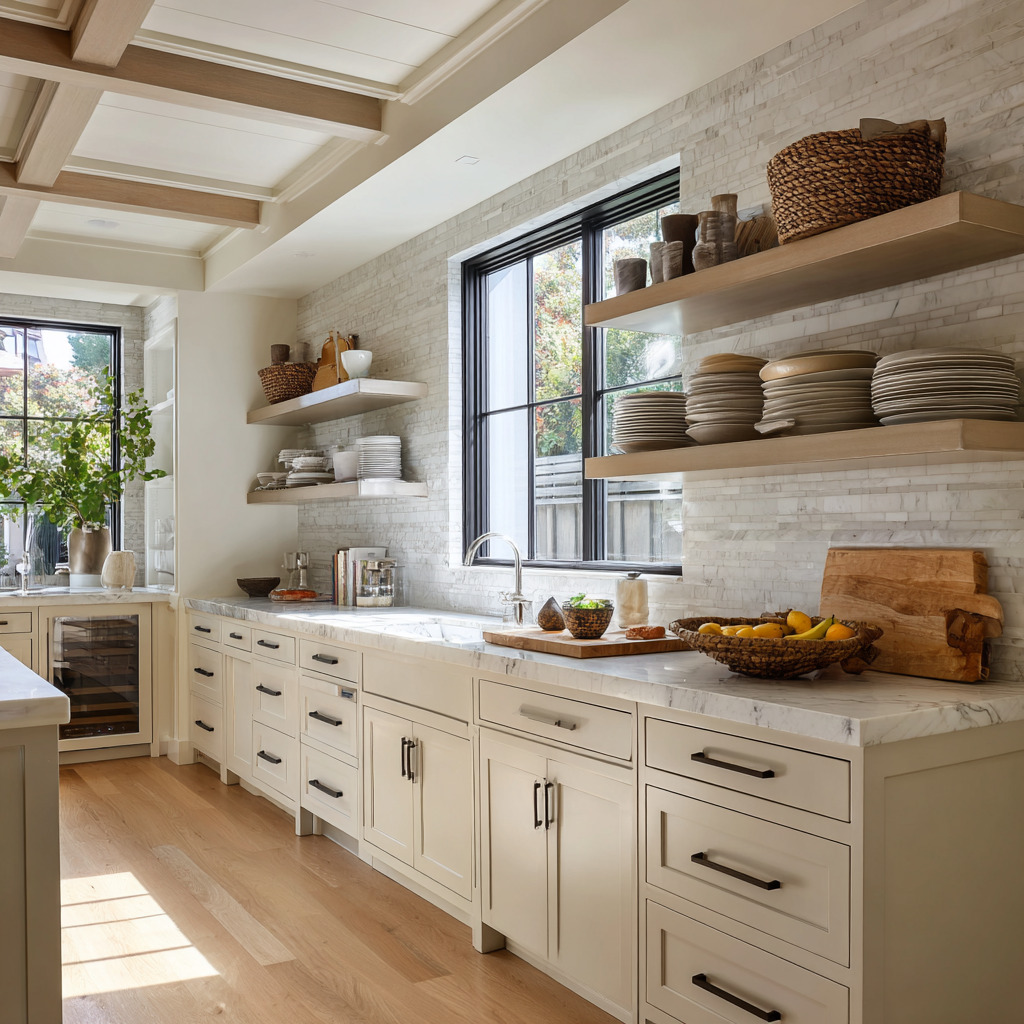
- Excessive open shelving: Open shelves look great in photos, but replacing too many cabinets with shelves removes storage and creates constant visual clutter.
- Highly decorative cabinet trim and corbels: Ornamental trim pieces increase fabrication and installation costs but don’t improve how the kitchen functions.
- Oversized islands beyond what the space needs: Islands that are pushed too large often disrupt traffic flow and require larger stone slabs and more cabinetry.
Bathroom upgrades that often disappoint
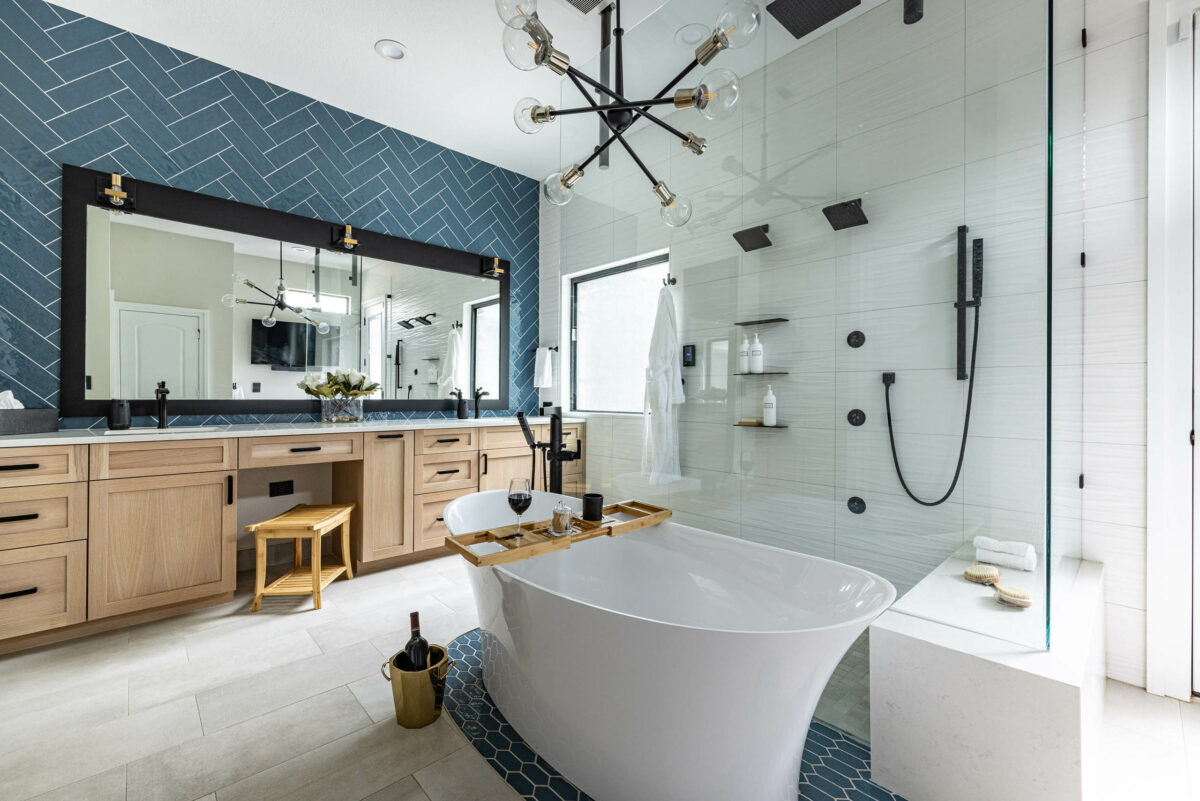
- Multiple body sprays in showers: These systems require additional plumbing valves and water pressure, but many homeowners discover they rarely use them after the first few weeks.
- Vessel sinks: These bowl-style sinks sit on top of the counter and can splash water more easily than integrated sinks.
- Ultra-large freestanding tubs: These can look beautiful in a showroom, but for the homeowners that rarely take baths, this is a budget-waster. See what type of bathtub is perfect for YOU.
- Highly decorative plumbing fixtures: Some faucets cost dramatically more without offering better durability or performance. Talk to a professional interior designer to learn to tell the difference!!
Tile and surface decisions that multiply labor
- Tiny mosaic tiles covering entire shower walls: These require significantly more installation time and grout maintenance.
- Intricate tile layouts with complex cuts: The design can be beautiful, but the labor involved increases costs quickly.
- Mixing several tile styles in the same room: Multiple tile transitions increase installation complexity without always improving the visual result.
Trendy design choices that age quickly
- Extremely bold tile patterns: What looks exciting today can feel dated surprisingly fast!!
- Highly themed design concepts: Designs tied too closely to a specific trend can make a space feel outdated FAR sooner than expected.
Many of these are the design decisions that increase cost simply because they are complicated to build, heavily marketed, or trendy at a given moment. Understanding the difference between these two categories is one of the most powerful ways to take control of your remodeling budget!!
Remodeling costs start to make a LOT more sense once you understand what is actually driving them up.
Some of your dream selections might be the very features that make your home feel extraordinary…and those can be wonderful investments when they improve how you live.
But others just add complexity, pricey materials, or labor without giving you much in return.

The smartest thing you can do before finalizing your plans is identify EXACTLY which choices are pushing your budget higher. If you’d like help seeing that clearly, schedule a 15-minute video consultation with me and we’ll walk through your ideas together. I can point out which selections in your project are driving the most cost…and you might be surprised!
About the author:

Robin Burrill, RID, NCIDQ, ASID, IDS, CAPS, is an award-winning professional kitchen, bath, and interior designer. Robin and her husband, Robert Mathews, have owned Signature Home Services, Inc. for over three decades, establishing a superior in-house team with a widespread reputation for delivering meticulous design to their many repeat clients.
In 2022, the national publication, Kitchen and Bath Design News magazine, named Robin to their Top Innovator list in recognition of her achievements in the field of kitchen and bath design. In 2024, she was named one of the Fall 2024 Market Pros and “tastemakers” by ANDMORE at High Point Market. In 2024 and again in 2025, Fixr identified her as one of the Top Professional Interior Designers for their nationwide audience. At the start of 2025, she then acted as one of Dallas Market’s “Style Eyes” at Lightovation and Total Home & Gift Market.
Over her extensive career, Robin has been quoted in Architectural Digest and Forbes multiple times; her design work has been featured in top national trade publications; and she has been interviewed for Designers Today magazine’s “Profiles in Design” video series, among others. Widely respected for the depth of her knowledge, Robin is a sought after speaker and judge for many design industry events.
In 2023, Robin designed a bench for Charleston Forge, making her foray into product design. Robin currently serves as a volunteer on the board of the Dallas/Ft. Worth chapter of the Interior Design Society.
Leave a Reply