
The open floor plan has become one of the norms in residential home design. Practically an absolute.
Can you even remember when new homes were still built with closed-off kitchens?!
Cropping up as far back as the 1950s, this layout genuinely improved how families lived. They brought light far deeper into the home, they turned kitchens into warm gathering spaces, and they allowed for daily life to unfold together instead of sending everyone to different spaces.
When an open design works, it works beautifully.

But good design doesn’t stop at what’s popular, or trendy, or a widely accepted “absolute.” It asks harder questions.
I’ve seen open concepts succeed, but I’ve also seen them quietly frustrate families who assumed openness was the goal. An open plan should support YOUR life as it actually exists today. But…what does that look like? How do you know if an open plan is truly right for you?
I believe are 9 different questions to consider…and once you see these distinctions, you can’t unsee them!!
1. How much of your life actually overlaps with others at home during the day?
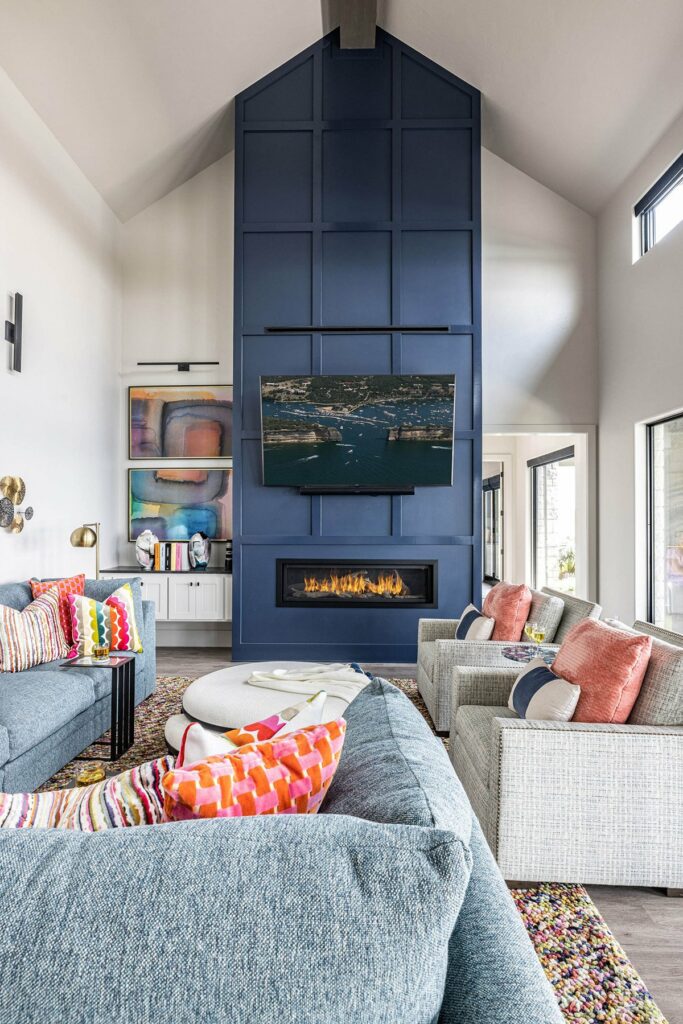
If you live at home with others whose lives naturally overlap with yours (relaxing together, eating together, etc.), that’s when open floor plan tend to thrive. Cooking, talking, helping with homework, folding laundry, hosting friends…these moments are when you coexist with others.For MANY families, this shared rhythm is exactly what makes a home feel alive.
Where openness becomes frustrating, though, is when daily routines don’t overlap much (or at all). If multiple people need quiet focus throughout the day, or schedules pull everyone in different directions (someone works nights, for instance), then the space can start to feel chaotic. The layout hasn’t failed in these cases…just the assumptions behind it.
2. What stage of family life are you in now?
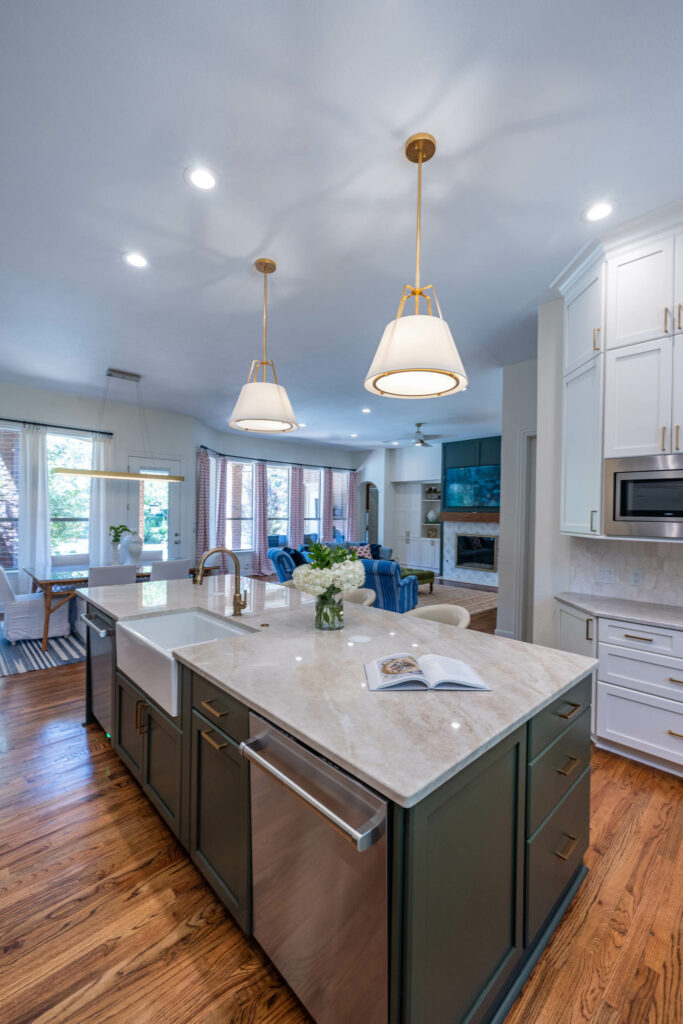
For families with young kiddos, open plans are highly supportive. Visibility across spaces means supervision feels natural, and parents can stay connected without hovering. It’s one of the reasons open concepts became so popular in the first place!!
But as children grow, the needs change. Teenagers don’t always want isolation…but they do want control over their environment. Open plans work when the home offers true retreat elsewhere—from bedrooms that feel private to flex spaces with doors.
Getting acoustics right in your home is important for everyone’s comfort and privacy, too…
3. How do you personally experience noise?
Some households have a house that hums, and it feels downright good for them. Maybe there’s music playing…or a conversation drifting…or the sound of life happening. Open plans support that beautifully.
Other families process sound VERY differently. When noise travels unchecked, it can create fatigue or irritability. This is partly about the layout itself, and it’s ALWAYS about the lack of acoustic planning. For more sound-sensitive folks (you know who you are), soft materials, ceiling treatments, rugs, upholstery, and intentional zoning change everything.
4. Is our kitchen a social space, or a specifically functional one?
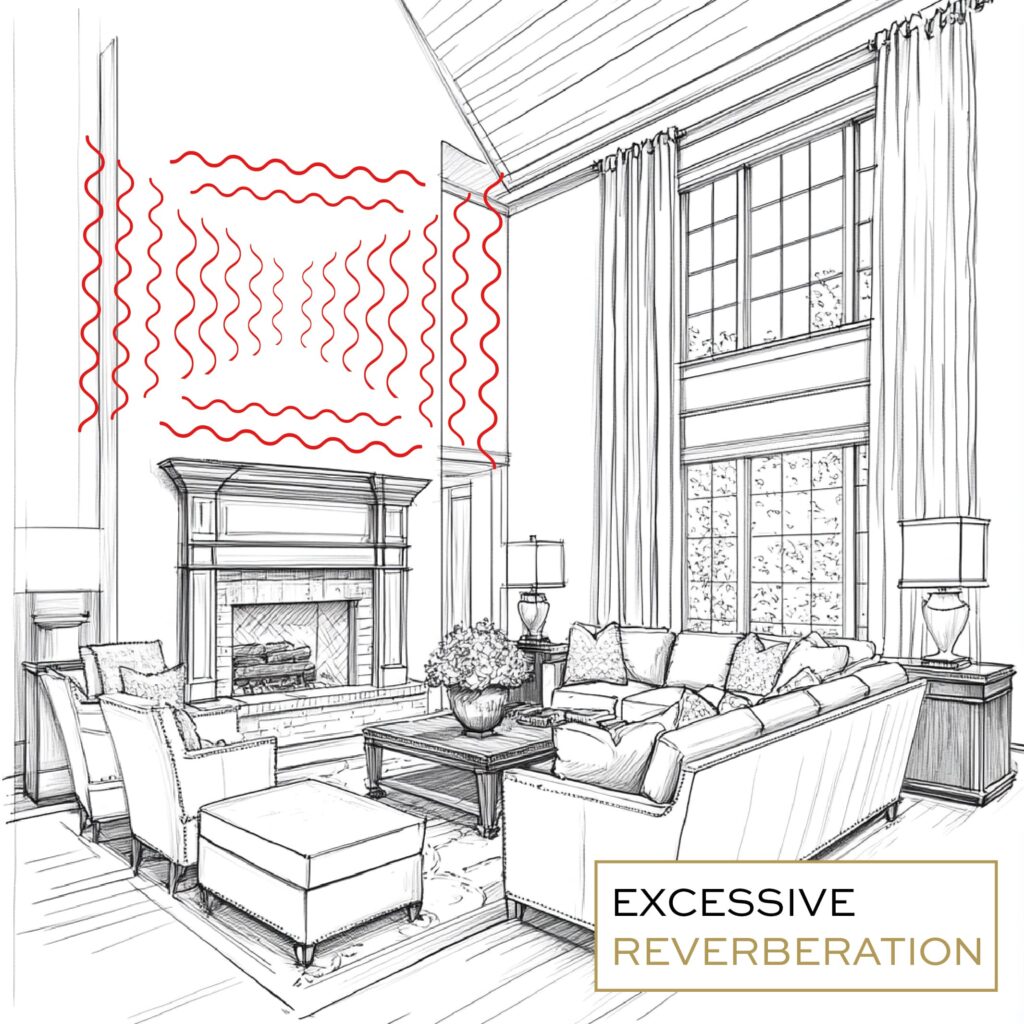
Sixty years ago, open kitchens forever changed how families gather. They allow the cook (not always just Mom anymore!) to always participate in the conversation. Entertaining feels more fluid, too. For a LOT of homeowners we’ve worked with, this set-up is non-negotiable.
However…challenges do arise when a kitchen does more “heavy lifting” type cooking. I’m talking about frequent cooking, potent aromas, visual clutter, or a cooking space where the homeowner WANTS some peace and privacy. Any of those cases can make constant exposure feel…well, uncomfortable!!
Which kind of use does your kitchen get?…
5. How much visual activity helps you feel energized, or overwhelmed?
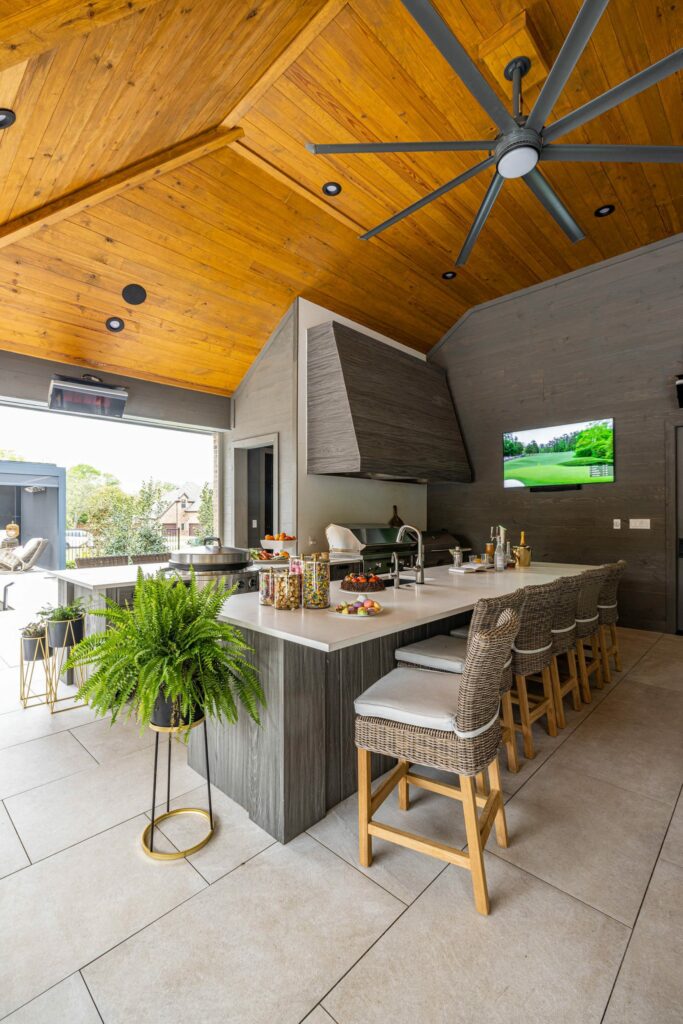
Open plans bring in more light and new views. For many people, that sense of openness feels grounding. Expansive. Attractive.
For others, though, too many sightlines create mental noise. When everything is visible at once, it’s harder to relax—especially when some of those sightlines include other responsibilities, to-dos, clutter, and more!! What’s a person to do if this is you?! Cohesive materials, intentional furniture placement, and clear focal points allow the eye to REST.
6. How do you really entertain?
If entertaining in your home is always casual, or VERY frequent, or beautifully fluid, then open plans are a dream! Guests get to circulate naturally, conversations overlap, and hosting no longer feels performative.
If entertaining for you is more formal (or decidedly occasional), openness still has value, but flexibility becomes your priority. Why? Well…spaces that can expand or contract based on use tend to meet the “odds-and-ends” needs you have when you do periodically host!
Read more about flex space design for some ideas.
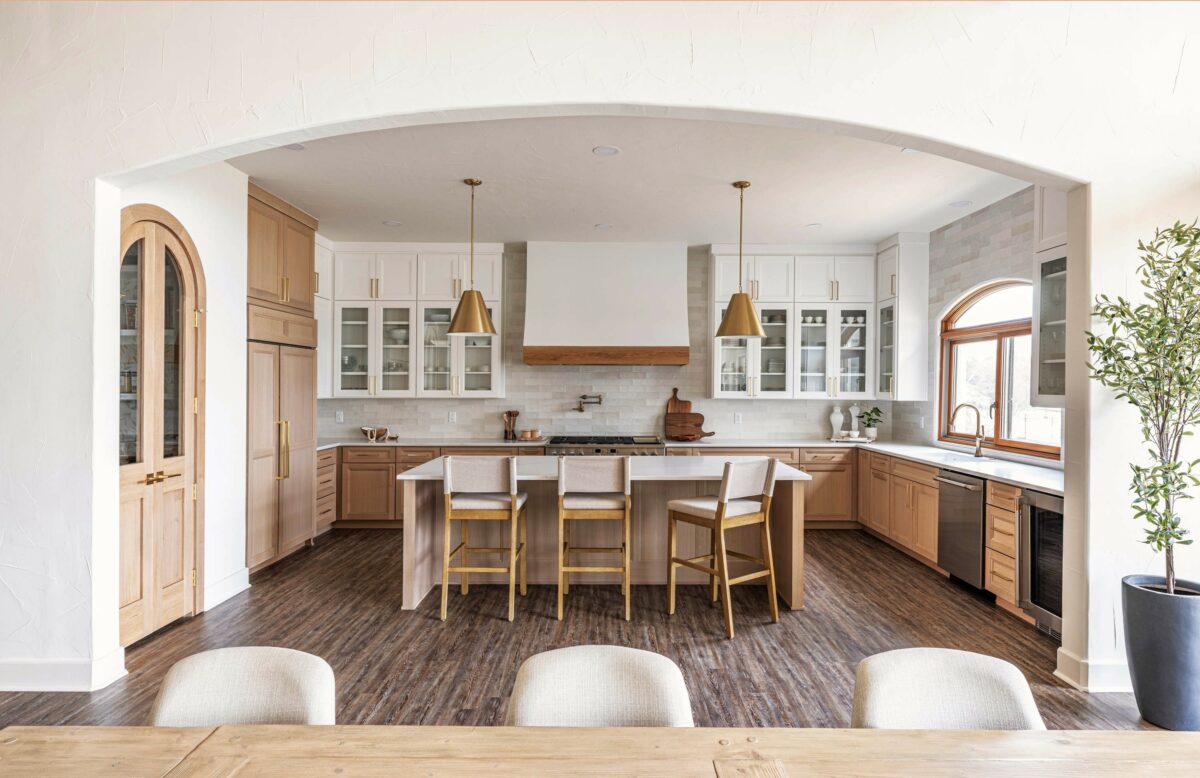
7. Is the scale of your space working with the layout, or against it?
Open plans shine in homes with the right proportions and scale. That means there’s enough space to define zones through:
- Furniture
- Ceiling changes
- Door and window distribution
- And lighting
In homes where scale hasn’t been done right, open plans feel undefined. Rooms blur together without purpose. This isn’t about square footage…it’s about proportion and flow. When scale is done professionally, openness feels luxurious.
This question isn’t so much about what you need based on your lifestyle, rather it helps you put your finger on what feels “off” if you have an open floorplan that feels cold or empty.
8. Where does your focused work or quiet time happen?
It’s a HUGE shift that no one is talking enough about: modern homes ask more of their spaces than ever before.
Open living areas work great when focused activities have a clear home elsewhere, but if they just kind of float around an open plan, that’s where trouble starts!!
Without a place for quiet work, deep focus, or hobby space, frustration builds (for everyone). Openness in home design is not the opposite of privacy, it’s just knowing how to designate spaces with intention.
Check out these custom garage ideas for some awesome dedicated spaces…
9. What kind of emotional experience do you want from your home?
At its core, an open floor plan reflects a belief in:
- Constant connection
- And shared experiences
Unsurprisingly, that aligns beautifully with what a LOT of families thrive on.

However, the most successful homes don’t follow trends or perceived norms, they respond to the people living inside them. When openness is coupled with intentional spaces for enclosure, retreat, and calm, your home starts to feel intuitive.
At the end of the day, the question isn’t whether an open floor plan is “right” or “wrong.” It’s whether YOUR home is going to support the way you live, or force you to adapt in ways you wouldn’t naturally want to.
Those are the kinds of projects we take on at Signature Home Services: where we help people see their homes more clearly, often in ways they hadn’t considered yet.
If ANY one of these questions made you pause, even for a second, you’re already in the right headspace!! Reach out to the team when you’re ready to talk through what’s working and what isn’t—then, we can help you see what your home could do better. The most meaningful design decisions start with clarity!!
Schedule a Clarity Call with us today!!
Quiz: which layout is right for you?
About the author:
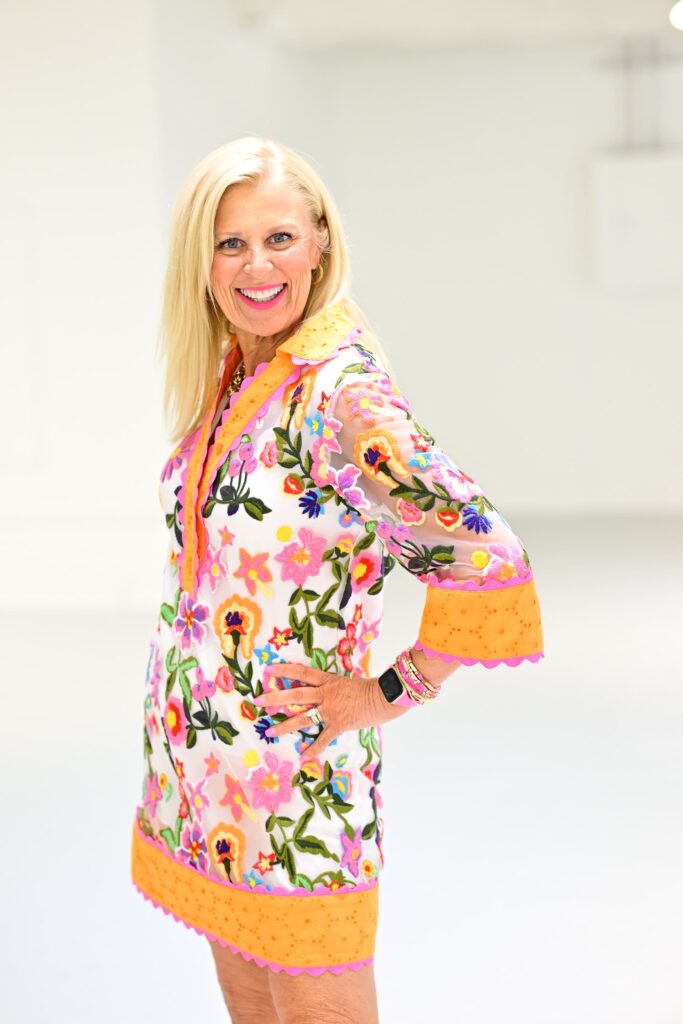
Robin Burrill, RID, NCIDQ, ASID, IDS, CAPS, is an award-winning professional kitchen, bath, and interior designer. Robin and her husband, Robert Mathews, have owned Signature Home Services, Inc. for over three decades, establishing a superior in-house team with a widespread reputation for delivering meticulous design to their many repeat clients.
In 2022, the national publication, Kitchen and Bath Design News magazine, named Robin to their Top Innovator list in recognition of her achievements in the field of kitchen and bath design. In 2024, she was named one of the Fall 2024 Market Pros and “tastemakers” by ANDMORE at High Point Market. In 2024 and again in 2025, Fixr identified her as one of the Top Professional Interior Designers for their nationwide audience. At the start of 2025, she then acted as one of Dallas Market’s “Style Eyes” at Lightovation and Total Home & Gift Market.
Over her extensive career, Robin has been quoted in Architectural Digest and Forbes multiple times; her design work has been featured in top national trade publications; and she has been interviewed for Designers Today magazine’s “Profiles in Design” video series, among others. Widely respected for the depth of her knowledge, Robin is a sought after speaker and judge for many design industry events.
In 2023, Robin designed a bench for Charleston Forge, making her foray into product design. Robin currently serves as a volunteer on the board of the Dallas/Ft. Worth chapter of the Interior Design Society.