

It is possible to fall in love with a kitchen design that, in practice, would quietly make your life harder.
This is the reality that no one tells you when you’re staring at a beautiful 3D rendering. You see that generous kitchen island, the airy shelves, the deep-basin sink…everything looks beautiful, and the arguments behind each feature feel smart.
But if that kitchen designer hasn’t asked you the right questions, the kitchen will almost definitely disappoint. A kitchen can be flawlessly designed and still be completely wrong for you.
When a kitchen layout forces you into one visible prep area in a home with multiple cooks, or hides tools you use daily, or sacrifices storage for aesthetics, you end up adapting to the space instead of the space supporting you. That’s needless, and it stops you from living the way you want.
Smart design personalization is about identifying and removing friction. That doesn’t necessarily mean extravagance, either! It starts with studying your real habits and building around them so your kitchen feels intuitive.
Here are the major (and often trendy) kitchen design features that look great on paper, and do work for some homeowners, but might not work for you…
The Oversized Waterfall Island
A large waterfall island is a generous slab of stone that extends to the floor on both ends, creating a sort of sculptural centerpiece in the middle of your kitchen. It becomes the visual anchor of the space, and it’s made up of equal parts prep surface and gathering zone.
On paper, this feature makes sense. It creates an expansive workspace, photographs beautifully, signals investment, and creates the feeling of a modern social home.
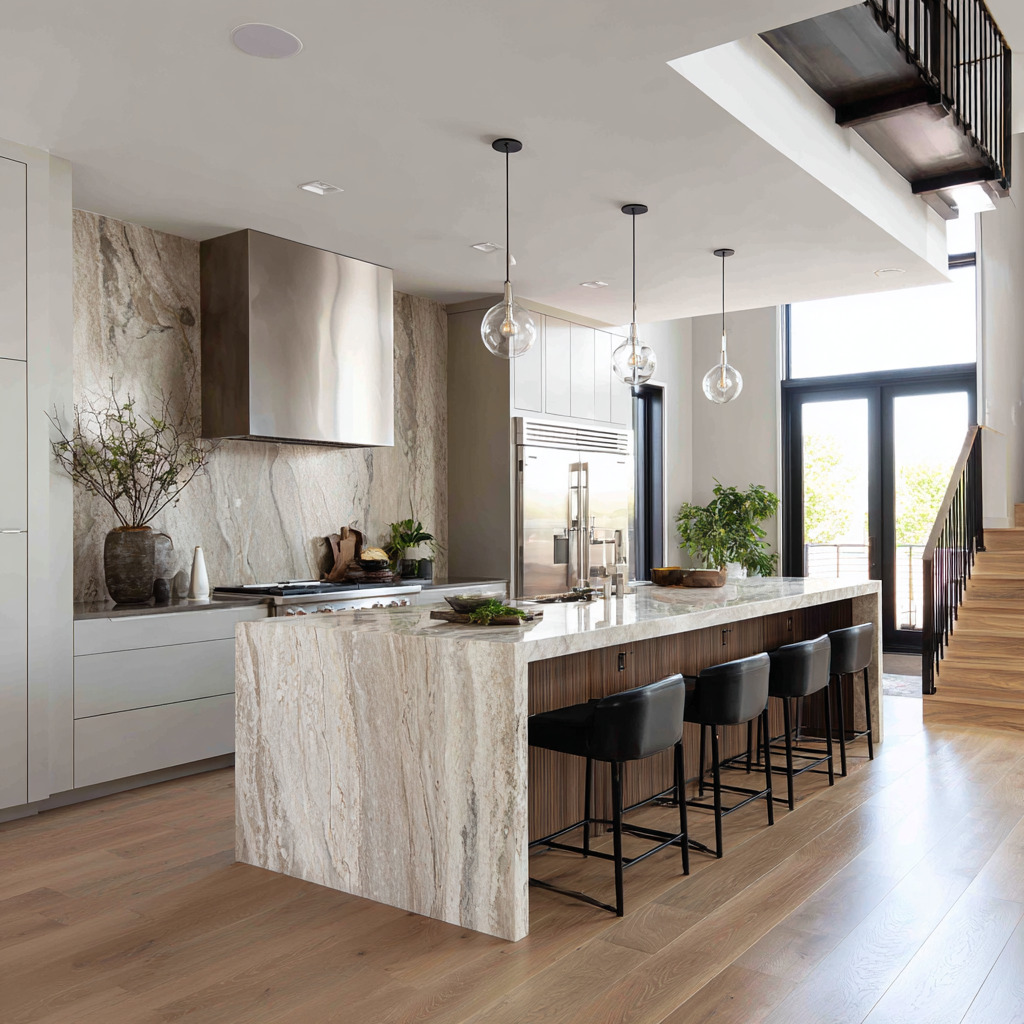
But does this design feature work for you, the way you use your kitchen? Let’s see…
| Works well if: | Otherwise frustrating if: |
| • You cook lightly and entertain often • You host catered gatherings where food arrives finished • You prefer open sightlines and don’t mind visible prep • You have one primary cook at a time • You use your kitchen as a social hub first, and culinary workspace second | • You cook complex meals with multiple components at once • You batch cook, bake from scratch, or manage multiple dietary needs • You like containment or visual calm while cooking • Multiple people cook or prep simultaneously • You see your kitchen as a high-performance workspace |
Reality check: If your kitchen island regularly holds cutting boards, mixing bowls, grocery bags, homework, and two people trying to prep at once…then you shouldn’t design a showpiece island, because you need a custom traffic pattern instead.
Open Shelving Instead of Upper Cabinets
Open shelving can replace traditional upper kitchen cabinets with exposed horizontal shelves, which leaves your favorite dishes, glassware, and décor fully visible. This creates an airy and architectural feel, and removes visual weight from the upper half of the room.
In renderings, this approach feels fresh and elevated. It signals restraint…you know, the kind where every object is intentional and beautifully arranged!!
Would this work well for you, beyond whatever your gut tells you aesthetically?
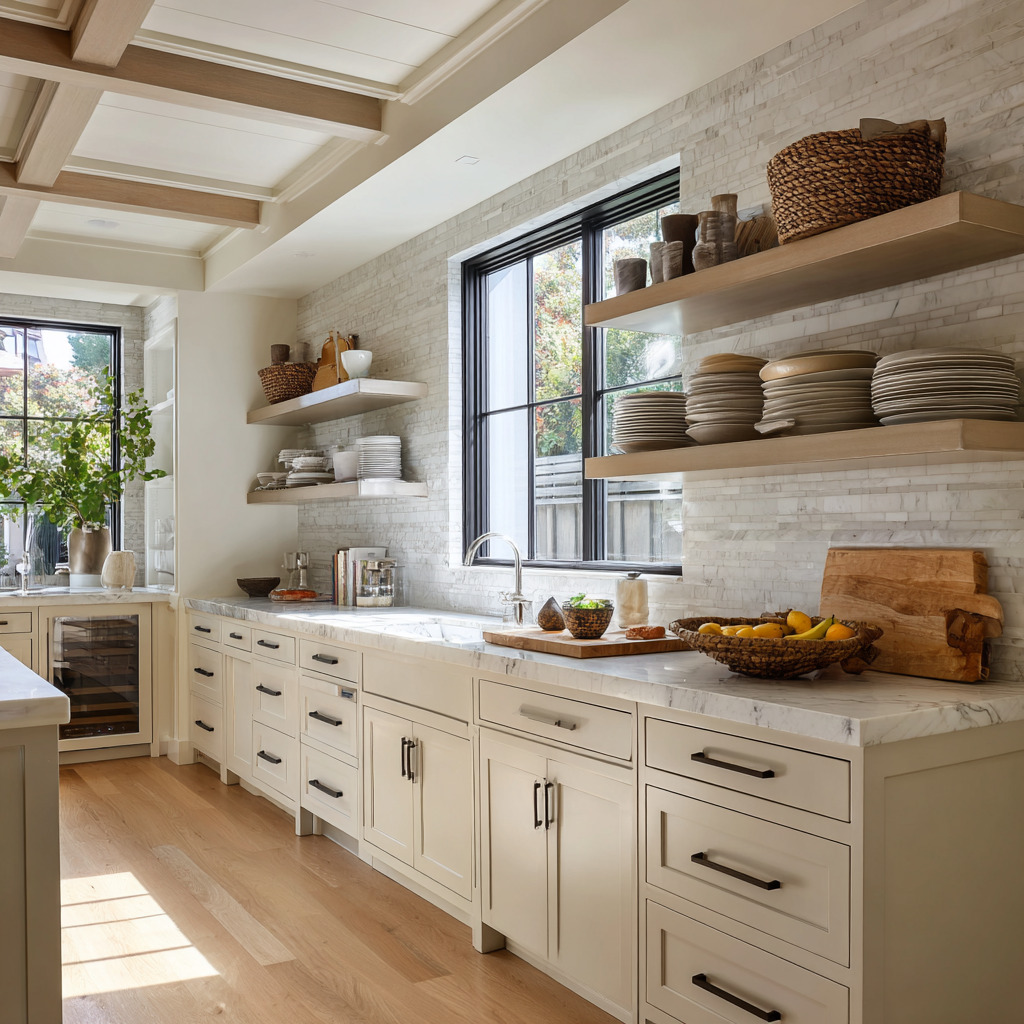
| Works well if: | Otherwise frustrating if: |
| • You own coordinated dishware that you genuinely love displaying • You cook lightly, with minimal grease and steam • You enjoy styling and restyling your kitchen regularly • You have strong alternative storage elsewhere (walk-in pantry, scullery…) • You live in a low-dust environment and don’t mind regular upkeep | • You rely on mixed storage containers, bulk goods, or everyday utilitarian items • You sauté, fry, or bake frequently, or use highly aromatic spices • You prefer low-maintenance storage that hides visual noise • Your kitchen has to carry the full burden of your storage needs • You value efficiency over display and don’t want to dust your dishes |
Reality check: Trends like open shelving are not inherently wrong, but they assume a lifestyle of curation and maintenance that some of us don’t actually live. If you would feel stressed knowing that every cereal bowl and plastic lid is permanently on display, or don’t want to dust every other day, then your kitchen needs closed upper cabinets!!
The Deep, Single Farmhouse Sink (Without Accessories)
This is the classic apron-front farmhouse sink: as one uninterrupted bowl, it’s extra wide and typically deeper than standard basins. It makes a strong design statement and signals a hardworking or heritage-inspired kitchen.
In a kitchen design plan, a farmhouse sink seems wonderfully practical. One large cavity easily handles oversized pans, sheet trays, and stockpots…and the exposed apron adds a flair of character and craftsmanship.
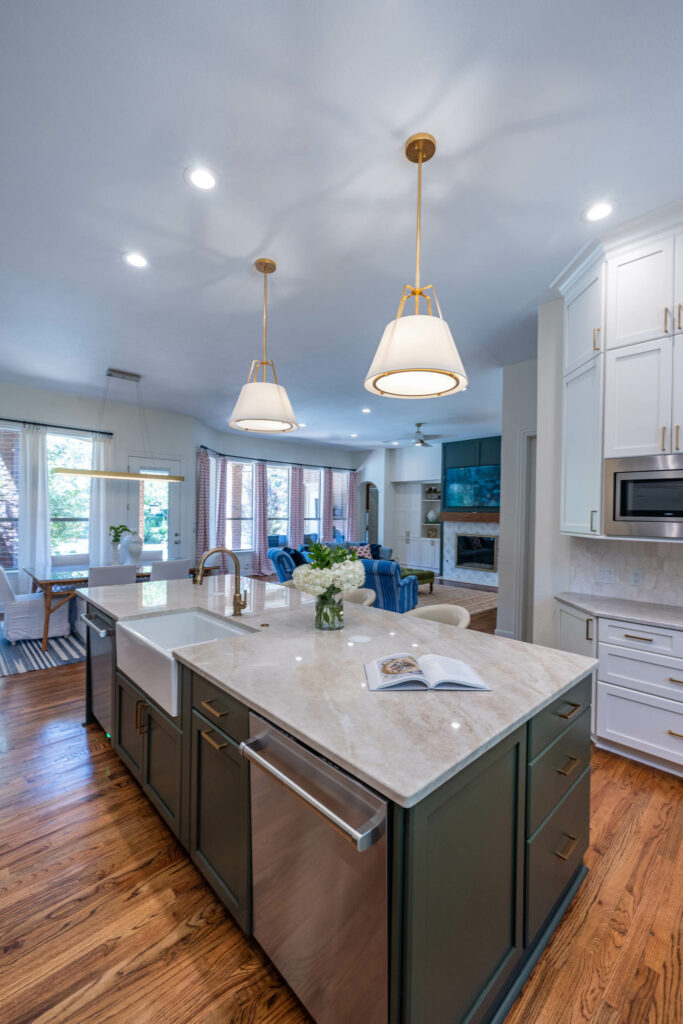
| Works well if: | Otherwise frustrating if: |
| • You are taller and comfortable reaching into deeper basins • You regularly wash large bakeware or oversized cookware • You have a secondary prep sink elsewhere • You prefer a single, open basin for flexibility • You value aesthetic presence as much as utility | • You are petite or experience back or shoulder strain • You wash a high volume of smaller items daily • Your main sink must handle prep, rinsing, and cleanup simultaneously • You manage allergen separation or need distinct washing zones • You prioritize ergonomics and workflow above all else |
Reality check: A deep, single bowl can be beautiful and functional, but without integrated accessories (like bottom grids, sliding cutting boards, or tiered racks) it becomes a cavern instead of a practical workstation.
The All-White Kitchen
An all-white kitchen uses white cabinetry, white countertops, white backsplash, and often pale flooring to create one continuous, luminous composition. The effect is expansive and visually calm, especially in natural light.
White reflects light beautifully, feels clean, and reassures buyers that nothing is risky or polarizing. (Really, though, are you remodeling to sell or remodeling to live?) Here’s how the performance of this design choice pans out in daily use…
| Works well if: | Otherwise frustrating if: |
| • You cook lightly and clean as you go • You prefer a serene, restrained palette • You have consistent cleaning support or high maintenance standards • You’re designing primarily with resale neutrality in mind • Your kitchen has enough windows to flood the room with natural light | • You cook with bold spices, oils, wine, or other richly pigmented ingredients • You enjoy visual warmth, texture, and depth in your surroundings • Your kitchen is high-traffic, with kids, pets, or frequent gatherings • You’re designing for long-term Return On Enjoyment® • Your kitchen relies heavily on artificial light |
Reality check: White will always have a place in kitchen design, but it’s no longer the automatic symbol of sophistication that it was in 2020. Trends sometimes evolve quietly, and if you’re drawn to white because it feels “safe,” you need to ask yourself whether you’re designing for a pretty photo or for the way you want to feel every morning in your home.
Built-In Banquette Dining
A built-in banquette inserts additional seating along a wall or into a corner. It’s often upholstered and paired with a pedestal or rectangular table. This creates a cozy nook and can make a breakfast area feel extremely charming!!
In floor plans, this kitchen design offers major efficiency. It maximizes square footage, eliminates extra chairs, and gives the impression of thoughtfulness that feels personal.
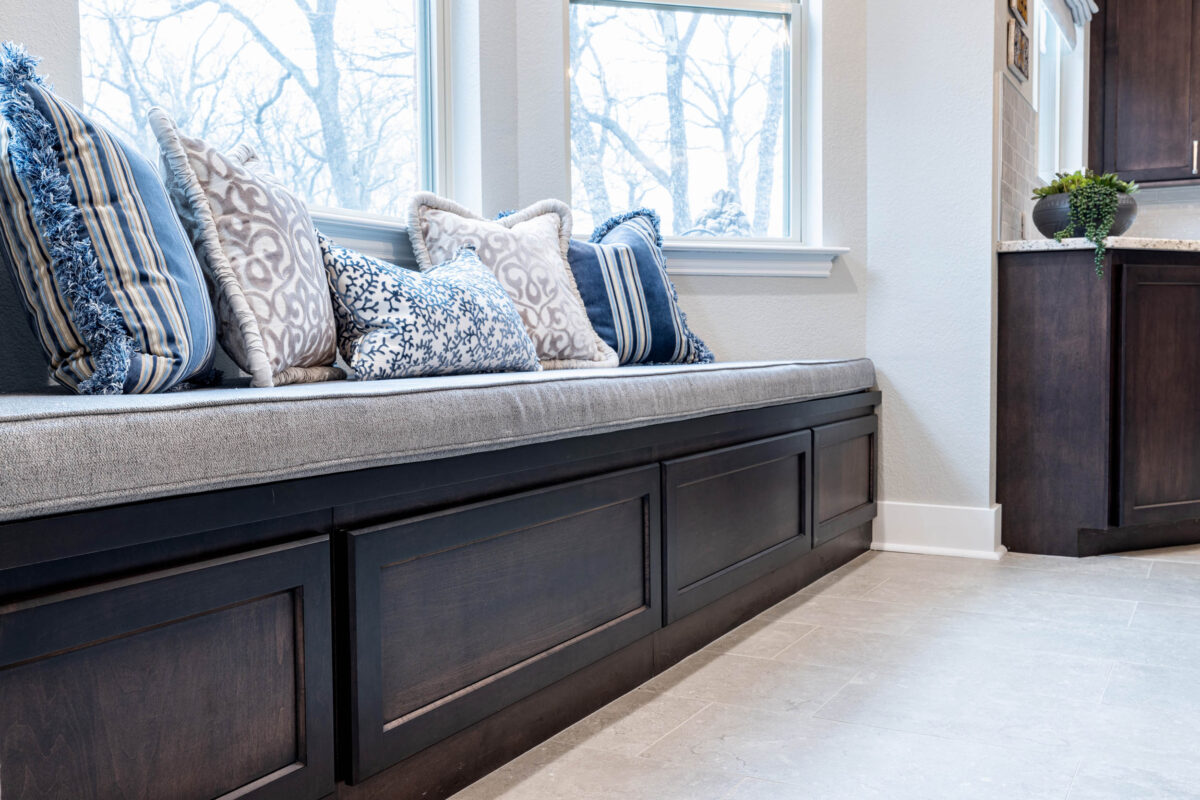
| Works well if: | Otherwise frustrating if: |
| • You live in a smaller home with predictable seating needs • You usually serve meals that are quick and informal • You appreciate intimate, close seating • You rarely rearrange your furniture • You are comfortable with fixed cushion depth and seat height | • Your household has changing schedules or a fluctuating headcount • Folks in your home tend to linger, spread out, or use the banquette area for multiple activities • You host guests of varied ages, sizes, or mobility levels • You value flexibility and the ability to reconfigure • You or your guests need easy in-and-out access |
Reality check: A banquette can be delightful, but it locks in proportions and circulation patterns in a way loose furniture doesn’t. If you can picture people in your home frequently asking others to stand up so they can slide out of the corner seat, then consider whether that charm is quietly replacing comfort…
The “One Big Pantry” Concept
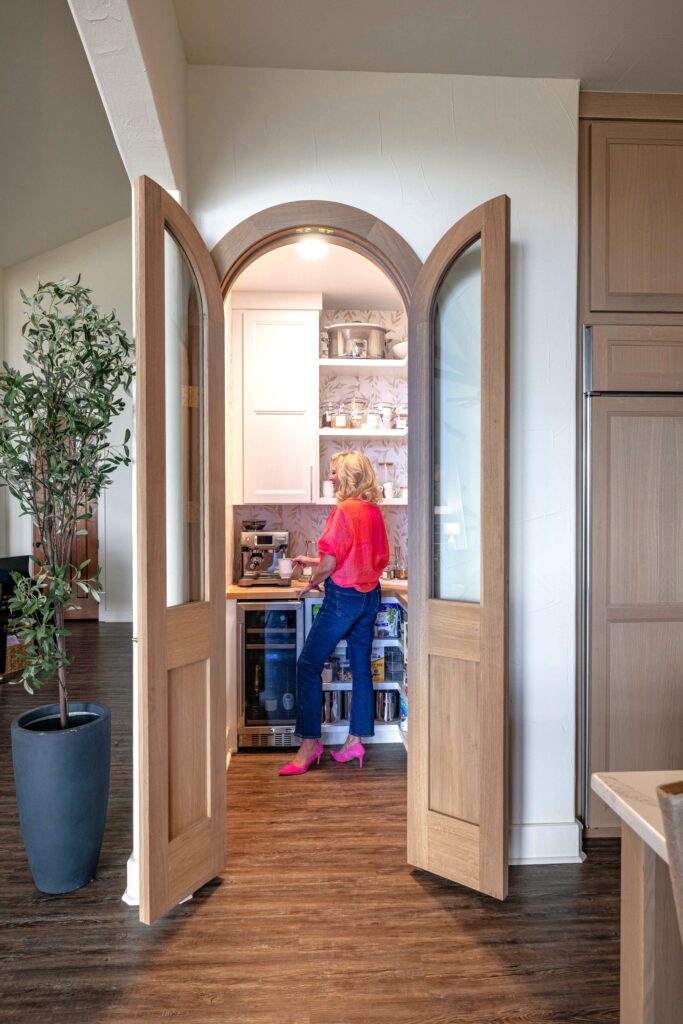
The “one big pantry” consolidates all dry goods, small appliances, and even overflow storage into a single (usually generous) walk-in space. It’s designed to centralize food storage and keep the main kitchen perimeter streamlined.
In a modern kitchen layout, this feels perfectly logical. Everything has a home behind one door, shelves can be labeled and categorized, and the kitchen itself appears uncluttered.
But it’s not the ideal set-up for everyone!!
| Works well if: | Otherwise frustrating if: | |
| • Yours is a smaller household with one primary cook • You usually have straightforward meal routines • Your kitchen has short, direct access between the pantry and prep zone • You have minimal appliance storage needs • You enjoy centralized inventory management | • Your household has multiple people preparing food at once • Your household requires dietary separation or specialty ingredients • You have a large kitchens where the pantry is physically removed from the work areas • You’re a bulk shopper or high-volume cooks • You benefit more from the ease of ingredients stored at point-of-use | |
Reality check: The challenge is not storage volume, it’s movement. If you can easily imagine yourself walking back and forth to the same door repeatedly while cooking a single meal, you might need distributed storage instead of a grand stockroom!!
The Flush-Mount (Fully Integrated) Refrigerator Wall
You can instantly imagine what this is: the fully integrated refrigerator concealed behind custom cabinetry panels. This means your fridge visually disappears into the surrounding millwork. From across the room, the wall reads as uninterrupted cabinetry instead of cabinets with a hole for a great big appliance.
In a kitchen design rendering, this usually feels elevated and beautifully architectural. It simplifies the sightline and creates a furniture-like presence.
| Works well if: | Otherwise frustrating if: |
| • You value seamless aesthetics above all else • You entertain frequently and prefer appliances to fade into the background • You maintain an organized interior system • You have a separate prep refrigerator or beverage unit • You prioritize symmetry or millwork continuity | • You rely on high refrigeration capacity for bulk or specialty foods • You have regular guests who need intuitive access to the fridge • You prefer a quick visual scanning of fridge contents before shopping • Your primary fridge must carry the full load of your household • You want maximum interior cubic footage for the appliance’s footprint |
Reality check: Integrated refrigeration can be part of a gorgeous kitchen design, but they often trade interior volume for visual calm. In some households, that trade is worth it! But if you regularly open your refrigerator just to “see what you have,” make sure you’re not designing something that literally hides it!!
The Microwave Drawer in a Primary Prep Zone
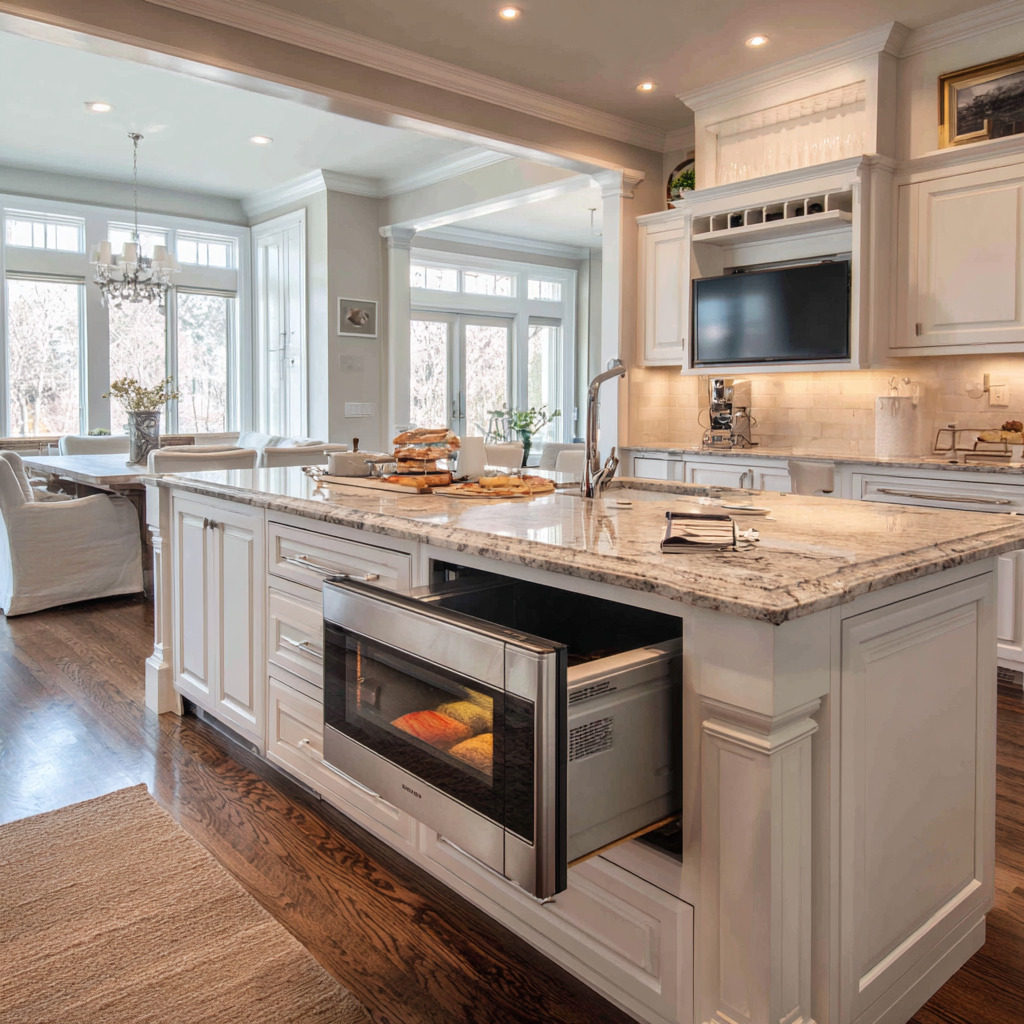
A microwave drawer is installed below the countertop, usually within the kitchen island, and allows this small appliance to disappear from sightlines. This feels streamlined and super contemporary, especially in kitchens aiming for a low-profile look.
In concept drawings, this design feature solves the “where do we put the microwave?” dilemma, and it does that elegantly. A microwave drawer frees up wall space too, and keeps your counter uncluttered.
| Works well if: | Otherwise frustrating if: |
| • You only use the microwave occasionally • Your kitchen has generous aisle space around the island • Yours is an adults-only home • You primarily reheat light items • Your kitchen plans the microwave outside the main prep corridor | • Your household uses the microwave multiple times a day Your kitchen has a tighter work triangle where traffic converges You have kids at home who regularly reheat food independently • It isn’t ergonomic for you to lift heavier dishes, soups, or liquids • Your kitchen island is the central prep hub |
Reality check: The placement of this design feature matters more than the concept itself. If you can picture someone in your home opening the microwave while you’re mid-prep at the island, then you might need better separation of the microwave space and prep area…
The Oversized Workstation Sink as the only Sink
A workstation sink is designed with integrated ledges that hold sliding cutting boards, colanders, drying racks, and prep trays. Unlike a deep farmhouse sink (which is one large basin), this sink is engineered as a layered prep system with ALL the features built directly into the bowl.
On paper, this is ingenious! You can chop, rinse, strain, and stage ingredients in one contained footprint, keeping water and mess centralized and counters visually clear.
| Works well if: | Otherwise frustrating if: |
| • You are the sole primary cook • You prefer contained, efficient prep in one location • You cook in defined phases (prep first, clean later) • You value built-in accessories and layered functionality • Your kitchen includes a secondary bar or prep sink elsewhere | • Multiple people prep or clean up at the same time • You need simultaneous washing and food prep zones • Your cooking style overlaps prep, plating, and washing • You rely on open counter space for spreading out ingredients • This would be your only water source in the kitchen |
Reality check: The challenge arises when your solitary, highly specialized sink must also serve as your only cleanup and rinse point. If your kitchen regularly has someone rinsing produce while someone else cooks, then one “super sink” might not outperform two strategically placed ones…
What should you do? What can you do? What’s easiest to do now?
Your dream kitchen deserves a closer look. And you deserve a better kitchen design.
As you read through these examples, you might have felt a mix of reactions. Maybe you recognized your current kitchen in one of these features. Or maybe you saw one that you’ve been planning, and suddenly felt a flicker of hesitation.
That hesitation is useful!!

If you feel protective of a design idea you love, you can keep it in view and examine it through the lens of your daily habits.
If the idea of personalizing the conceptual design of your kitchen feels overwhelming, narrow your focus. You are identifying where energy is lost. Here’s an easy way to do so, and you can start right now:
- Observe your kitchen for one week as if you were studying someone else’s habits.
- Write down the moments that feel inefficient or mildly frustrating.
- Then list out what cooking or lifestyle habits would be part of your “best self,” but which you haven’t successfully implemented. (Maybe you’re trying to incorporate certain health habits or routines…your kitchen design can help you with that.)
- Describe, in one paragraph, how you want to feel in your kitchen five years from now, and how you want to be rocking all those habits and routines you aspire to!!
If you’re ready to explore what that alignment can look like in your home, start the conversation with our team. Bring your routines, your preferences, your aspirations, and we’ll translate them into a kitchen that fits you with precision!!
About the author:

Robin Burrill, RID, NCIDQ, ASID, IDS, CAPS, is an award-winning professional kitchen, bath, and interior designer. Robin and her husband, Robert Mathews, have owned Signature Home Services, Inc. for over three decades, establishing a superior in-house team with a widespread reputation for delivering meticulous design to their many repeat clients.
In 2022, the national publication, Kitchen and Bath Design News magazine, named Robin to their Top Innovator list in recognition of her achievements in the field of kitchen and bath design. In 2024, she was named one of the Fall 2024 Market Pros and “tastemakers” by ANDMORE at High Point Market. In 2024 and again in 2025, Fixr identified her as one of the Top Professional Interior Designers for their nationwide audience. At the start of 2025, she then acted as one of Dallas Market’s “Style Eyes” at Lightovation and Total Home & Gift Market.
Over her extensive career, Robin has been quoted in Architectural Digest and Forbes multiple times; her design work has been featured in top national trade publications; and she has been interviewed for Designers Today magazine’s “Profiles in Design” video series, among others. Widely respected for the depth of her knowledge, Robin is a sought after speaker and judge for many design industry events.
In 2023, Robin designed a bench for Charleston Forge, making her foray into product design. Robin currently serves as a volunteer on the board of the Dallas/Ft. Worth chapter of the Interior Design Society.
This is a great article on designing a beautiful and really functional kitchen!
Thanks, Priscilla! That’s the key word, isn’t it? “Functional.” ♥