
The kitchen island. It hasn’t been a fixture in kitchen design forever, but it HAS been for nearly a century. And, well…it’s become a feature we obsess over.
And why wouldn’t we?!
The kitchen island is a prep station, homework table, buffet, landing zone, and a place where people perpetually gather.
And today, we also have more design flexibility than ever before. Islands are custom sized for each kitchen…and the cabinetry and plumbing and electricity that go in (or don’t) are custom, too. And the countertops? SO many material options.
But how do you make the decisions on each of those factors?
- What is the right size?
- How far should it be from the cabinets?
- What happens if you install the in-island dishwasher on one side versus the other??
You can guess that these decisions have a BIG lifestyle impact. So…why not scroll this list and see the must-know impact of each as your kitchen island design unfolds?!
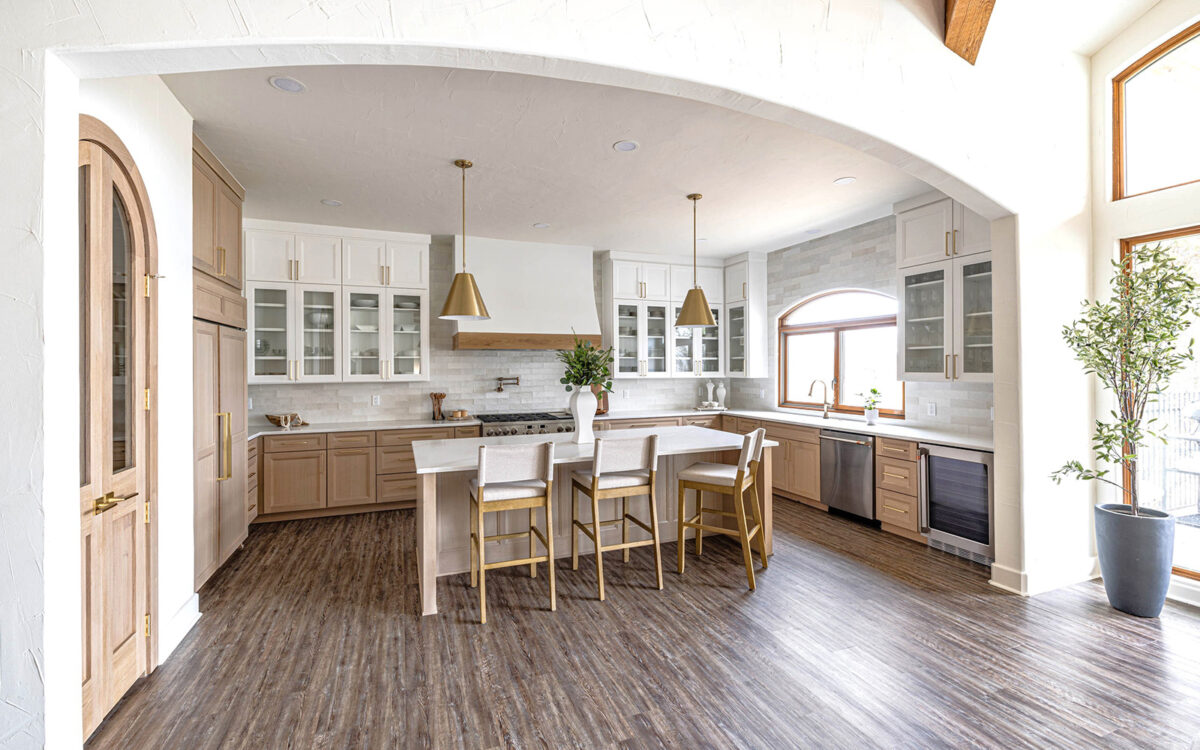
Question 1: How Big Should the Island Be?
Does a larger kitchen always mean you have to install the biggest possible island? Well, no. Scaling is a thing: you don’t want a tiny island in a massive kitchen…but you don’t have to go for the max possible size, either.
Here’s your “101” orientation of island size so you can decide…
Small islands (2-2½ feet by 4-5 feet)
A small kitchen island is a “must” in compact kitchens, of course. OR for homeowners who mostly cook alone. In the second case, a smaller island choice provides the needed prep space without making the room feel crowded. (And it avoids inviting people to congregate there, if you’d rather no one butt in…)
The downside is that a small island surface will fill up quickly. A cutting board and a grocery bag can suddenly leave you with very little room to work!!
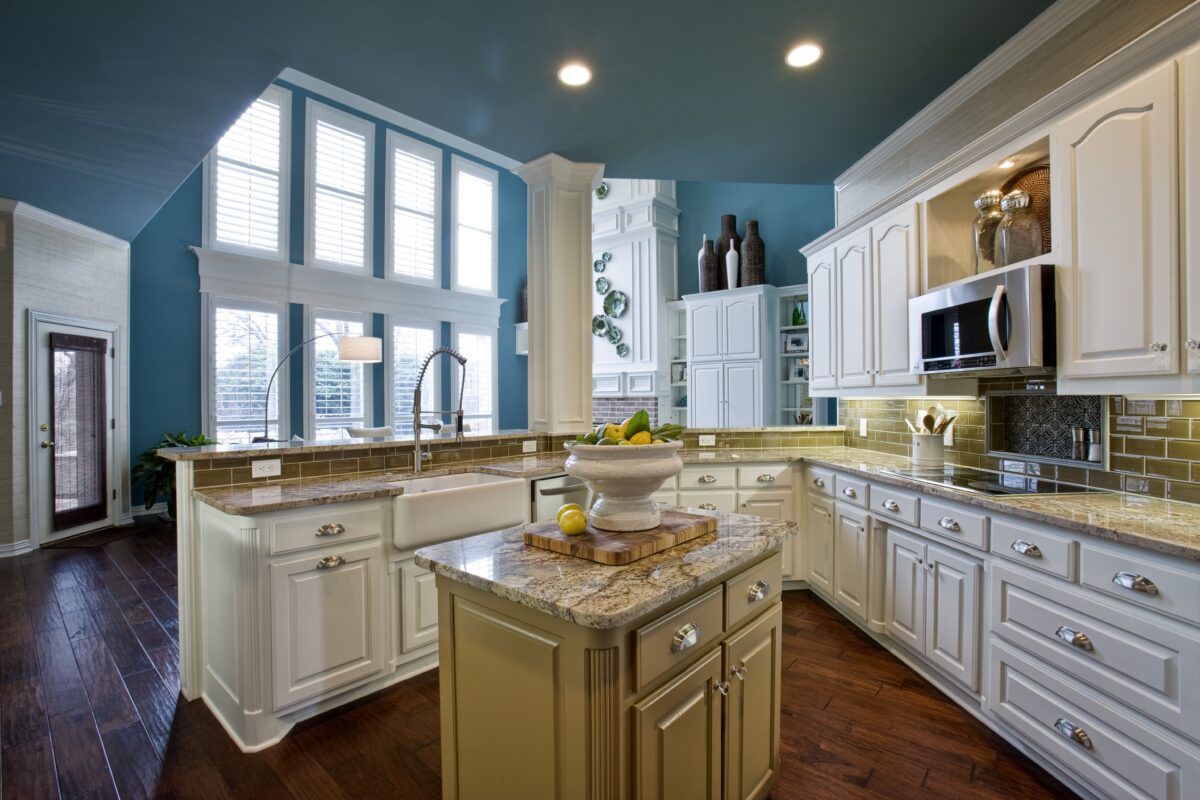
Medium islands (3-3½ feet by 6-7 feet)
For a whooole lot of homes, this is the sweet spot. (Though most of our clients in and around Keller, Texas—Southlake, Westlake, Grapevine, etc.—have the next size up…keep reading to see.)
With a medium kitchen island, there’s space for meal prep as well as serving during parties. There’s also ample seating space, or even room for a child doing homework while dinner is being made. Multiple people can comfortably work at a medium-sized kitchen island, too, without constantly getting in each other’s way.
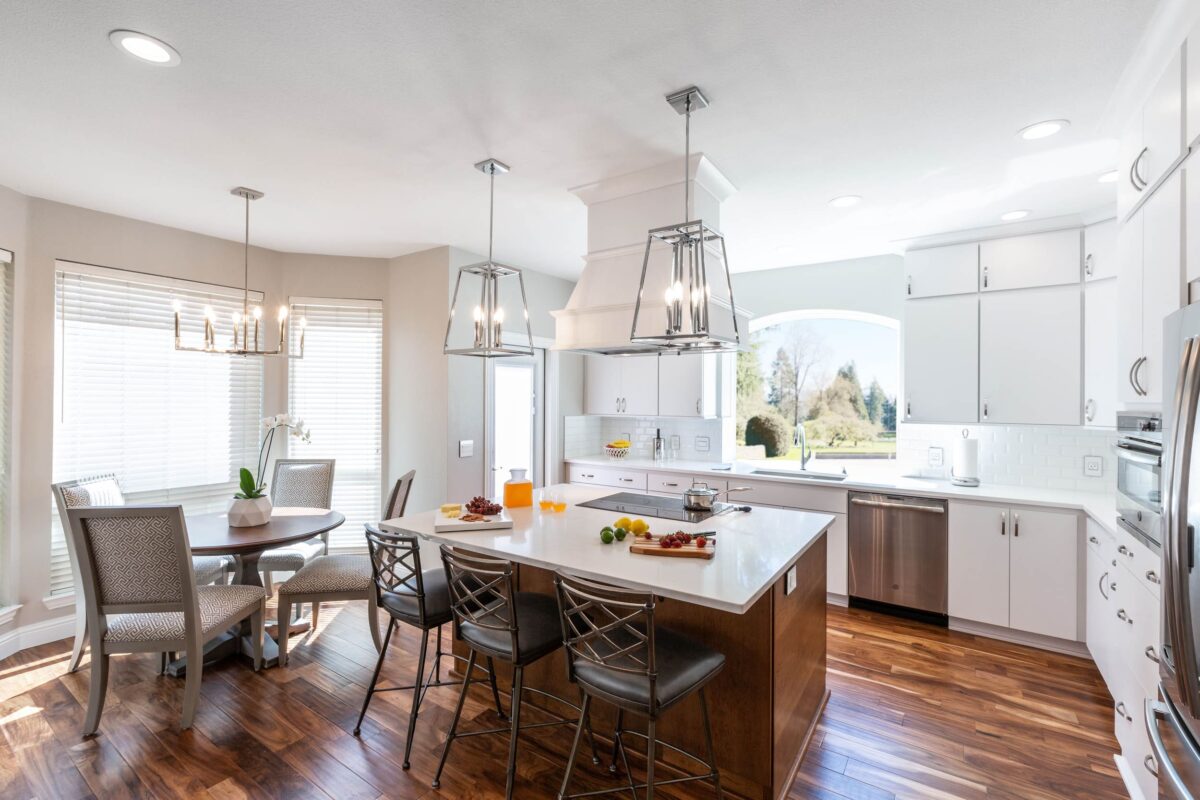
Large islands (about 3½-4½ feet by 8-10 feet)
Larger islands are a gamechanger if you entertain frequently or often have several family members cooking or hanging out together.
The tradeoff is not just that it requires a larger kitchen, mind you! You also have to remember that a larger island means more movement from one extreme to the other. Yes, walking! Every extra foot means more steps throughout the day. You get to decide if that’s a plus or not for you!
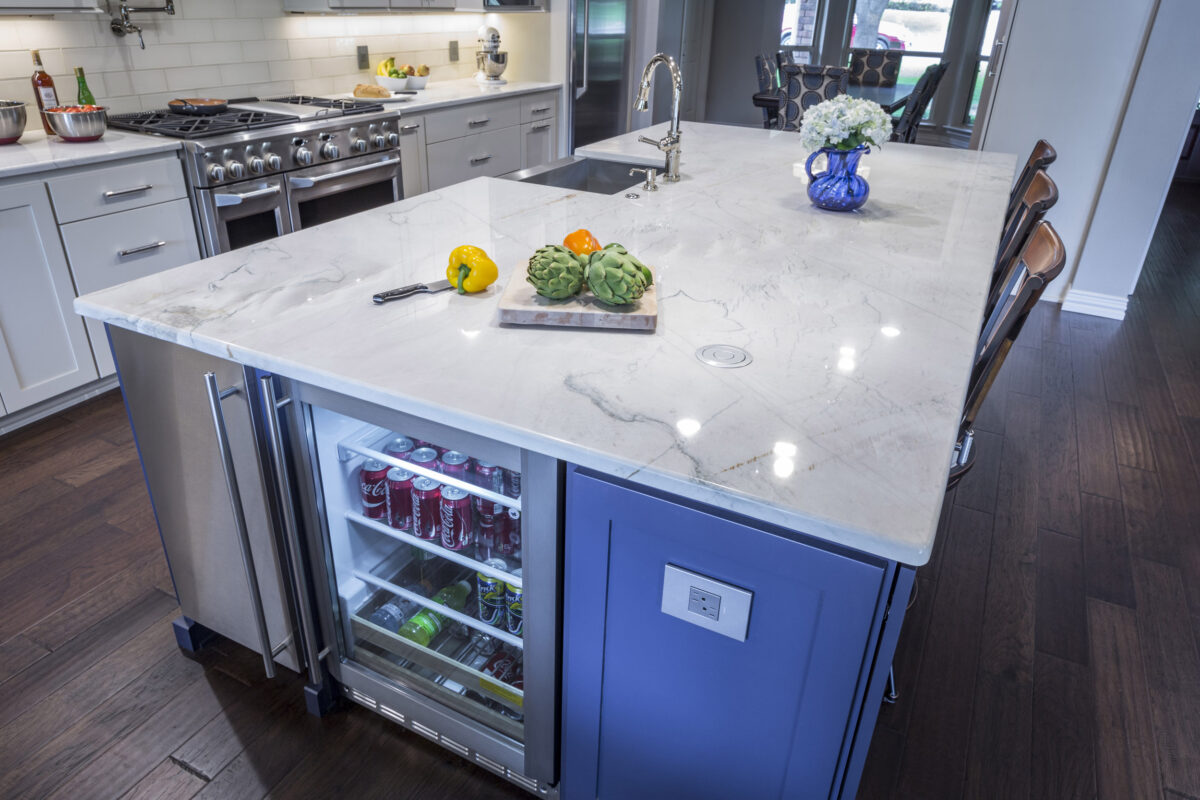
Question 2: Where Should the Island Go?
Even the perfect-sized island won’t perform well if it’s in the wrong location. Here’s what happens when you install your island…
Centered in the kitchen
This creates a balanced look and provides good circulation from every direction. It’s the layout most people picture, and for many kitchens it’s exactly right.
Shifted toward the dining area
If your family entertains often or serves buffet-style meals, moving the island slightly closer to the dining area can make serving easier and naturally encourage family and guests to gather away from the primary cooking zone. Clever, huh?
Question 3: How Much Space Should Be around It?
Do you know what standard answer is to this question? And whether the standard answer is the right one for you?!
Here are your options to consider…
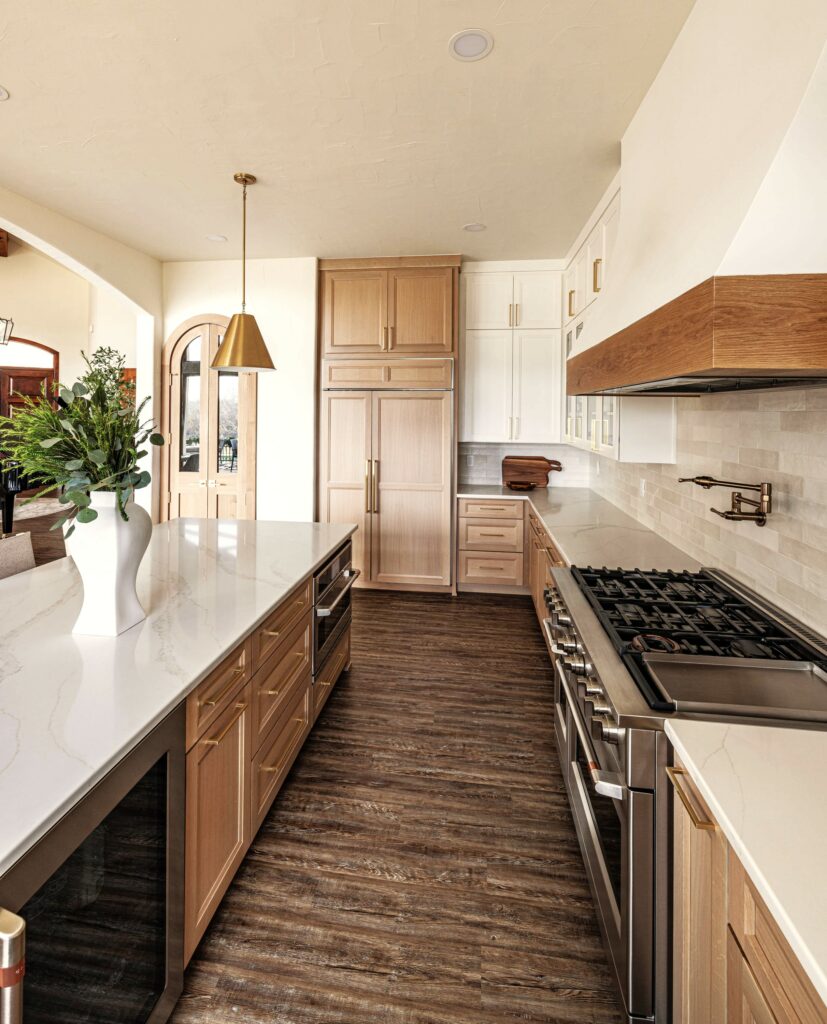
About 36 inches
Thirty-six inches is considered the minimum clearance between the island and the cabinetry or walls around it. This works in smaller kitchens, but it leaves very little room when appliances are open or two people need to pass one another.
Imagine someone unloading the dishwasher while another person is carrying a pot of boiling pasta…36 inches won’t cut it!!
About 42-48 inches
This is where flow and clearance around the kitchen island become much more comfortable.
With just an extra 6-12 inches more than “standard” clearance, folks can move around each other without interrupting work. Appliance doors open easily and can stay open, too!
This is the clearance range I recommend most often for our projects, because it balances comfort with efficiency.
More than 54 inches
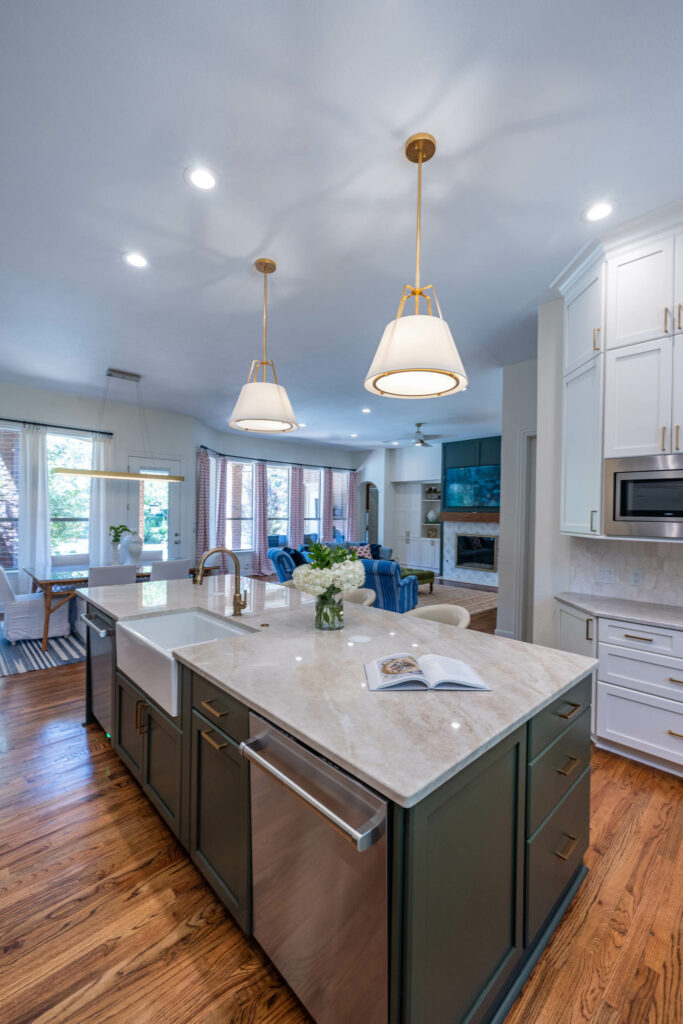
Extra-wide aisles create an open, flowly feeling. It’s also important to consider this if the mobility of someone at home is limited. But remember that every additional step adds up!
Think for yourself, now and in the future (walkers, wheelchairs…). You’ll know the right fit!!
Question 4: Where Should People sit?
Kitchen islands have become gathering places just as much as workspaces.
The question is…how do you want those two activities to coexist?!
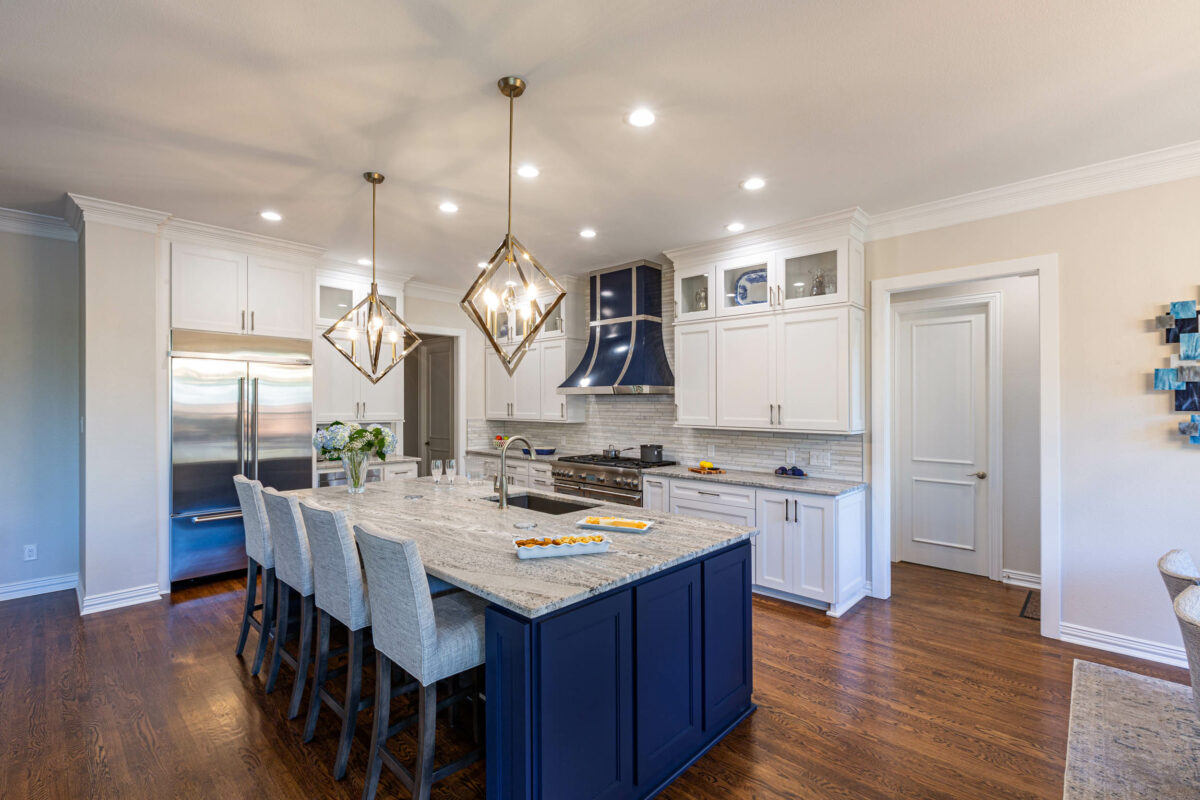
Seating on one side
This is the most versatile arrangement. People can eat, chat, or work on a laptop without constantly interfering with whoever is preparing food. It creates a natural distinction between the “working” side of the island and the “social” side.
Seating on two sides
As a fun alternative (given you have enough clearance, of course), wrapping seating around one corner to offer seating on two sides of the island makes conversation easier and creates a more inclusive gathering space.
However…this does also mean that guests are more likely to occupy areas that the cook needs for serving or cleanup.
As for number of seats, before adding more stools, let me ask you this question:

Do you want the island to function primarily as a workspace or as a gathering place?
Your answer should guide the design…
Question 5: What shape Works Best?
“You mean they’re not all rectangular?”
Well, no!
The shape of your kitchen island also influences how it functions and how people move around it. For instance, if it’s…
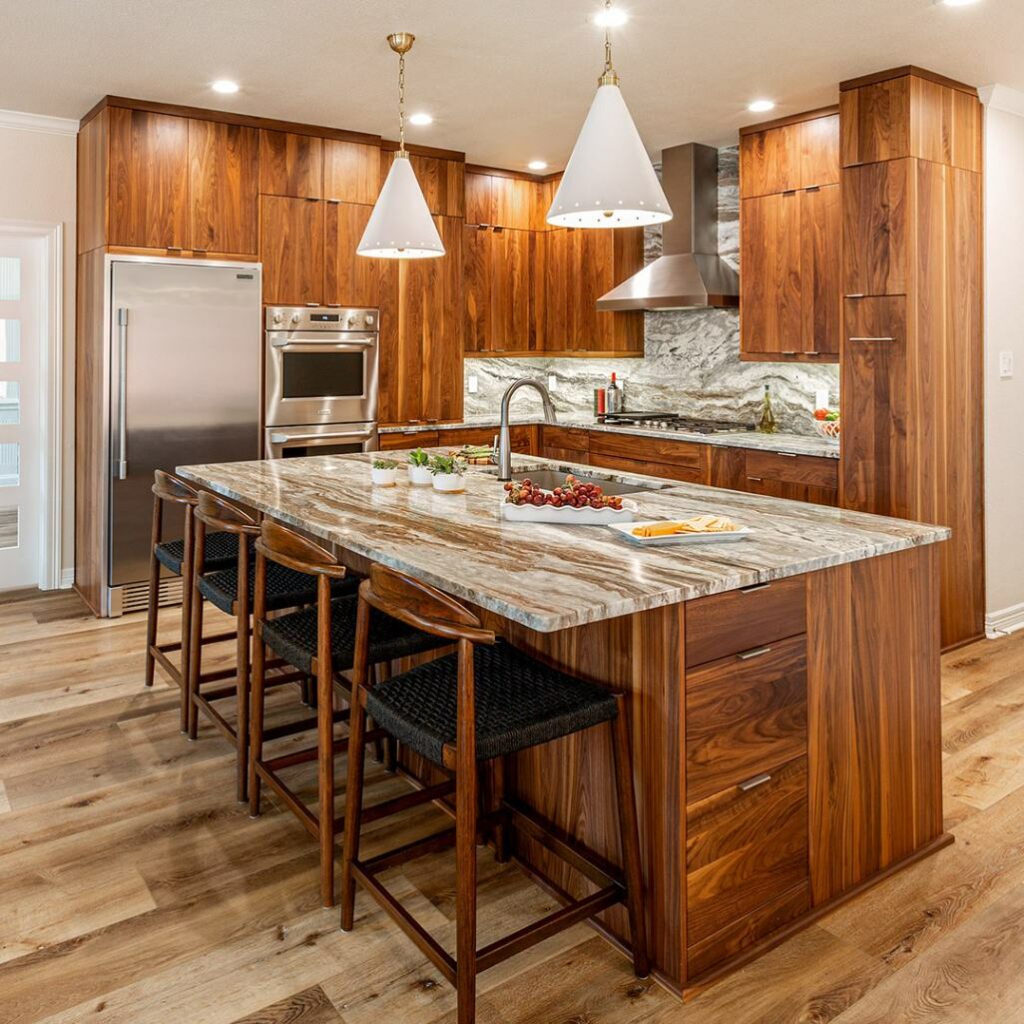
Rectangular
Rectangular kitchen islands are the most popular shape because they fit in between your two or three walls of cabinetry like Tetris!
They also provide generous prep space and accommodate seating easily.
There’s a reason they’ve remained the standard for decades…
Square
Square islands can work beautifully in kitchens, too. It just depends!
Do know, though, that square islands sometimes provide less efficient work zones (with “dead space” in the middle of the island). But maybe you want to use that “dead space” for a permanent centerpiece!
The best kitchen island is the one that supports your daily routine, in the same way that the best kitchen remodel is about making your life easier, leaving you Loving Your Home a little more every day.
Next step: book a 15-minute video call with me to share what you’d love for your own kitchen island upgrade!!
About the author:

Robin Burrill, RID, NCIDQ, ASID, IDS, CAPS, is an award-winning professional kitchen, bath, and interior designer. Robin and her husband, Robert Mathews, have owned Signature Home Services, Inc. for over three decades, establishing a superior in-house team with a widespread reputation for delivering meticulous design to their many repeat clients.
In 2022, the national publication, Kitchen and Bath Design News magazine, named Robin to their Top Innovator list in recognition of her achievements in the field of kitchen and bath design. In 2024, she was named one of the Fall 2024 Market Pros and “tastemakers” by ANDMORE at High Point Market. In 2024 and again in 2025, Fixr identified her as one of the Top Professional Interior Designers for their nationwide audience. At the start of 2025, she then acted as one of Dallas Market’s “Style Eyes” at Lightovation and Total Home & Gift Market.
Over her extensive career, Robin has been quoted in Architectural Digest and Forbes multiple times; her design work has been featured in top national trade publications; and she has been interviewed for Designers Today magazine’s “Profiles in Design” video series, among others. Widely respected for the depth of her knowledge, Robin is a sought after speaker and judge for many design industry events.
In 2023, Robin designed a bench for Charleston Forge, making her foray into product design. Robin currently serves as a volunteer on the board of the Dallas/Ft. Worth chapter of the Interior Design Society.
Leave a Reply