
Walk through the home organization aisle of a department store, or scroll through the depths of organizing videos online. You’ll hear the same advice over and over again: keep things where you use them…or, these organizing hacks will help you fit more into limited spaces!
But should you really keep the extra towels in the bathroom? And do serving dishes necessarily go near the dining room?
And do you really have to buy more labels and baskets?!
That all sounds logical, which is why organizing articles and influencers are so popular online.
But…even the most beautifully organized homes become cluttered again over time. Why?
With more than 30 years of experience designing whole homes around the way that my clients (homeowners in and around Keller, Texas, with average home square footage of around 5,500 sq. ft.—and PLENTY of stuff needing storage), I’ve put my own theories to practice over time. And I’ve come to firmly believe that the most common organizing tips are built around the wrong question.
The question isn’t, “where does this go?” It’s: “when will I reach for this again?”
And I can back that up! Just keep reading!!
We organize by “ownership” when we ought to organize by frequency
When I say that we tend to organize by “ownership,” I mean that the room each item “belongs” to is what typically guides us. We put kitchen items in the kitchen, and bathroom supplies in the bathroom. Guest bedding belongs in the guest room. Again…it seems logical, doesn’t it?
That is, until every room becomes responsible for storing every single thing that might EVER be used there.
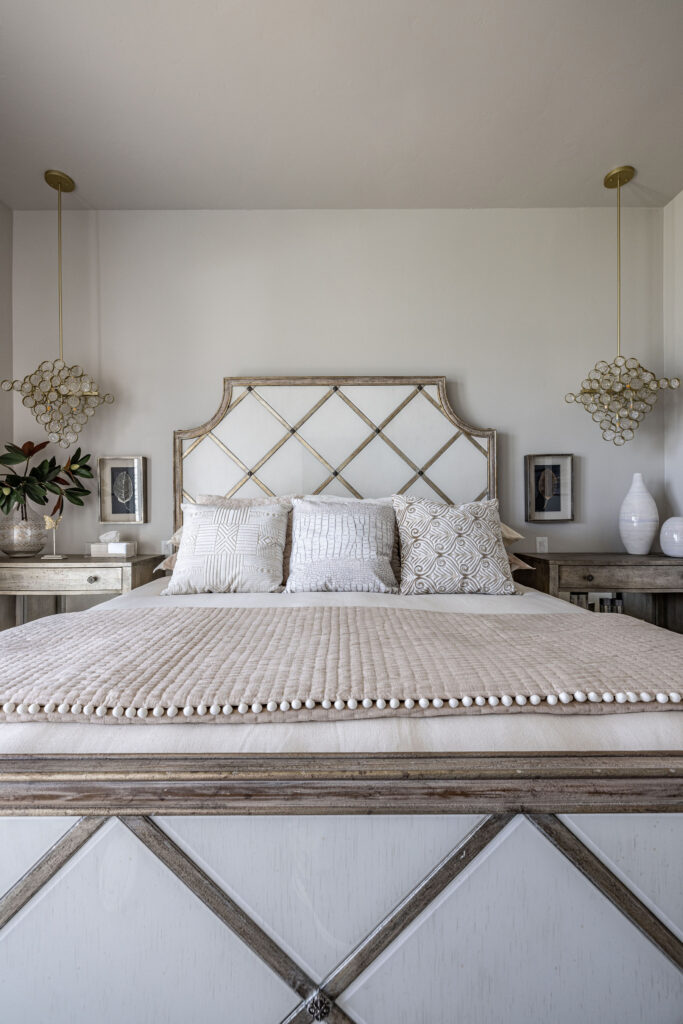
Home offices and guest rooms are some of the best examples. If your guest room starts housing the extra pillows, every blanket you’ve ever owned, spare comforters, seasonal quilts, luggage, and holiday gifts waiting to be wrapped, then it becomes unusable.
And the kitchen should absolutely store what you use every day. But it also tends to store the turkey platter you use once every Thanksgiving, the ice cream maker that comes out twice a year, and every specialty appliance you’ve acquired. Ever.

I call this the “miniature warehouse” effect. Every room becomes a storage unit.
Meanwhile, the items you use every day are forced to compete for space with things you won’t touch again for months.
Does it still seem logical to store everything by “ownership?!”
Think like an airport, not like a warehouse
One of my FAVORITE ways to explain this concept is this: think about an airport. Let’s say DFW. Can you picture it?!
Now, take a look at the airport maintenance maps. They aren’t organized by “ownership.” Instead, airports are organized around movement.
For example:
- The gates handling the greatest number of flights sit immediately inside the terminal
- Baggage systems are positioned in the specific places where they’re needed most
- Maintenance equipment used infrequently is stored outside the terminal
- Snow removal equipment waits quietly out of the way until winter arrives
Your home works the same way. Instead of asking where something belongs, ask how often it joins the flow of your everyday life.
More examples…
These are common things used every morning:
- Coffee mugs
- Breakfast foods
- Vitamins
- Dog food
- Keys
- Wallets
- Chargers
- Shoes
- Backpacks
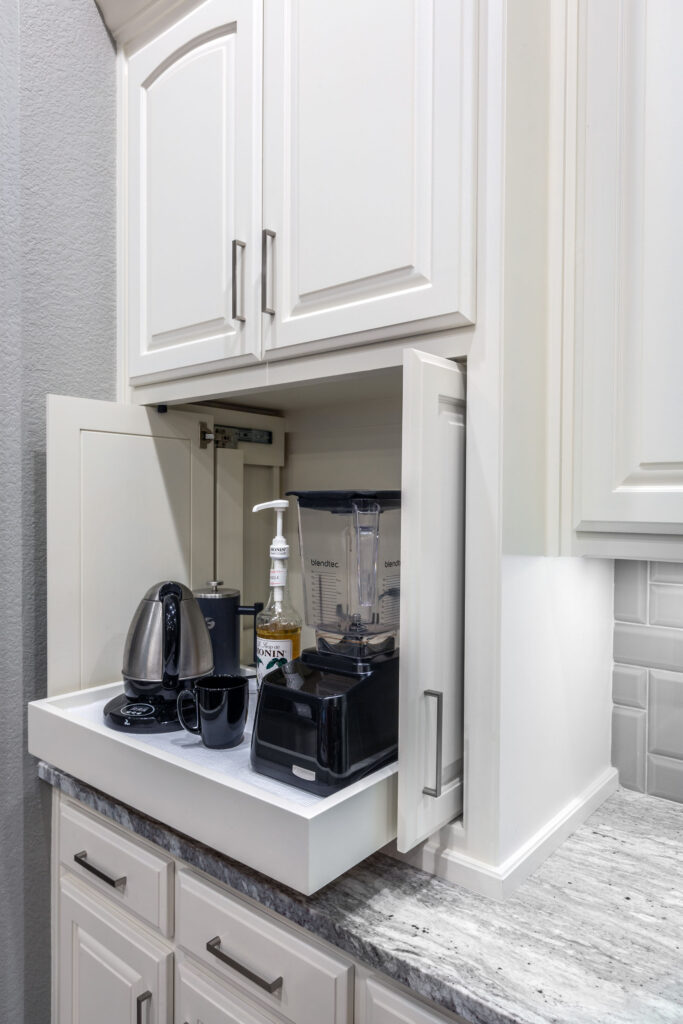
And these are things commonly used every evening:
- Your go-to dinner prep utensils
- Go-to plates, silverware and glasses
- Food storage containers
- TV remotes
- Throw blankets
And these are some of the items typically used in weekly routines:
- Laundry supplies
- Vacuum and broom
- Cleaning products
- Reusable shopping bags
- Sports or gym equipment
In contrast, here are some things used during occasional entertaining:
- Serving platters
- Extra folding chairs
- Beverage dispensers
- Table linens
And here are some popular seasonal items that come out once a year:
- Pool toys
- Patio cushions
- Holiday decorations
- Halloween décor
- Camping gear
- Suitcases
Notice something? These AREN’T room categories. They’re movement categories.

Once you begin designing storage around the way life flows through your home, everything starts making more sense. I call this your “access hierarchy.”
Create your own “access hierarchy”
I encourage you to stop thinking about rooms and start thinking about access. What do you need when?
Let’s start with the items that need prime real estate in your home. These are the daily items that you reach for constantly.
Some examples are:
- Coffee supplies
- Favorite cookware
- Toothbrushes
- Shoes you wear every week
- Chargers
- Keys
- Medications
Then, there are weekly items. These should still be convenient but don’t need the best locations.
Examples are:
- Laundry detergent
- Vacuum
- Slow cooker
- Extra pantry inventory
- Pet grooming supplies
- Board games
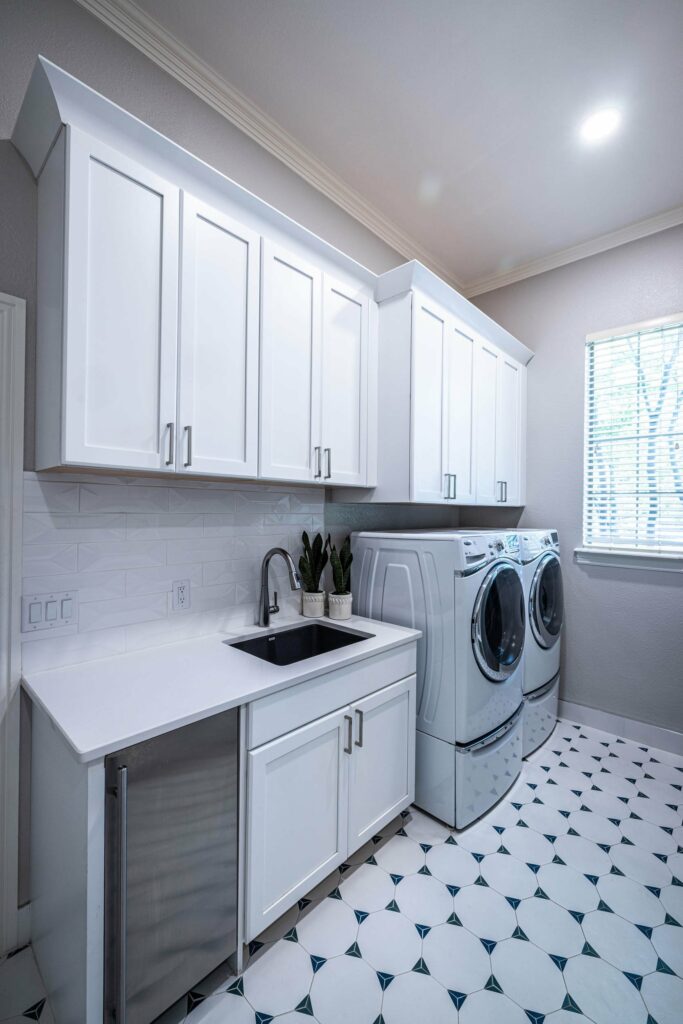
And monthly items can live a little further away, or simply behind other more frequently accessed items.
Examples include:
- Guest linens
- Specialty baking equipment
- Party serving pieces
- Extra paper goods
- Large coolers
- Folding tables
Finally, seasonal or annual items don’t deserve top-notch, everyday cabinet or closet space.
For example:
- Holiday décor
- Patio cushions
- Winter blankets
- Summer entertaining décor
- Camping gear
- Suitcases
- Artificial Christmas tree

Now, here’s an exercise to put your own hierarchy on paper.
- Grab a sheet of paper.
- Create four columns labeled Daily, Weekly, Monthly, and Seasonal.
- Without walking through your home, write down every item that immediately comes to mind under each heading.
Don’t overthink it!! Your brain already knows which belongings are constantly moving through your life. Those are the items that deserve your best storage locations.
The longer the list, the more valuable that storage should be. Everything else can gradually move farther away without making your home any less functional…
Instead of bigger cabinets…
One of the biggest misconceptions I hear during renovation consultations is this:
“We just need more storage space.”
Sometimes, that’s true. But very often, it isn’t. What you might need is better storage allocation.
When we remodel kitchens, pantries, mudrooms, laundry rooms, and closets, we start by studying your movement and lifestyle. We learn what items begin your morning, and what items get used every evening. We learn what you like to pull out for the holidays. And we also uncover what constantly migrates around the house because it doesn’t have a logical home!!
The answers to these questions inform your whole-home storage design: cabinet layouts, drawer sizes, pantry planning, closet organization, linen storage, garage storage, and—ultimately—decisions about what new storage should (or shouldn’t) be created.
The best closet organization and overall storage plans maximize your ease of daily living, and comfort of movement. In other words, they maximize convenience instead of square footage.
If you’re planning a renovation (or wondering why your home closet space and shelving doesn’t seem to work as well as it should) I’d love to have a conversation about how your home moves!!
A 15-minute discussion with me on video can help you uncover ideas that you’ve never considered. And those insights can shape everything that follows.

You can schedule a complimentary 15-minute video call with me directly through our website!! I’d love to help you see your home from an entirely new perspective.
About the author

Robin Burrill, RID, NCIDQ, ASID, IDS, CAPS, is an award-winning professional kitchen, bath, and interior designer. Robin and her husband, Robert Mathews, have owned Signature Home Services, Inc. for over three decades, establishing a superior in-house team with a widespread reputation for delivering meticulous design to their many repeat clients.
In 2022, the national publication, Kitchen and Bath Design News magazine, named Robin to their Top Innovator list in recognition of her achievements in the field of kitchen and bath design. In 2024, she was named one of the Fall 2024 Market Pros and “tastemakers” by ANDMORE at High Point Market. In 2024 and again in 2025, Fixr identified her as one of the Top Professional Interior Designers for their nationwide audience. At the start of 2025, she then acted as one of Dallas Market’s “Style Eyes” at Lightovation and Total Home & Gift Market.
Over her extensive career, Robin has been quoted in Architectural Digest and Forbes multiple times; her design work has been featured in top national trade publications; and she has been interviewed for Designers Today magazine’s “Profiles in Design” video series, among others. Widely respected for the depth of her knowledge, Robin is a sought after speaker and judge for many design industry events.
In 2023, Robin designed a bench for Charleston Forge, making her foray into product design. Robin currently serves as a volunteer on the board of the Dallas/Ft. Worth chapter of the Interior Design Society.